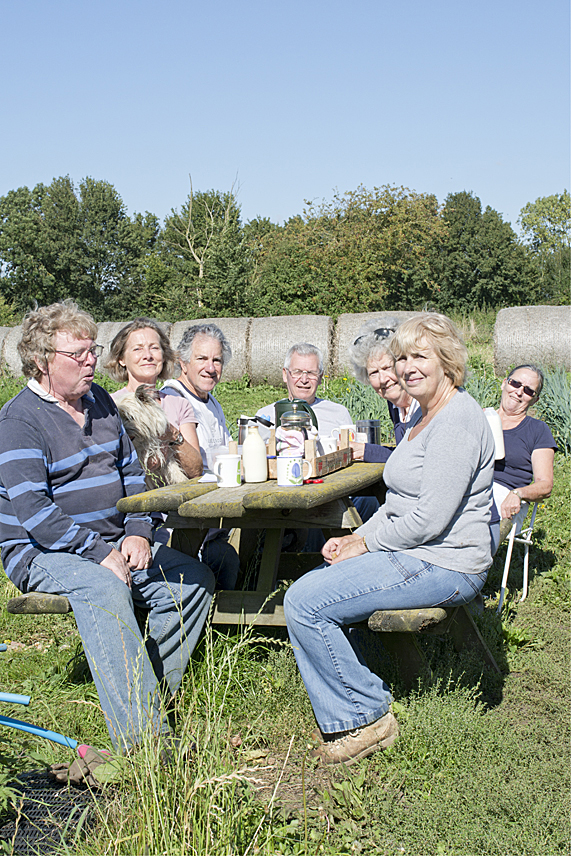
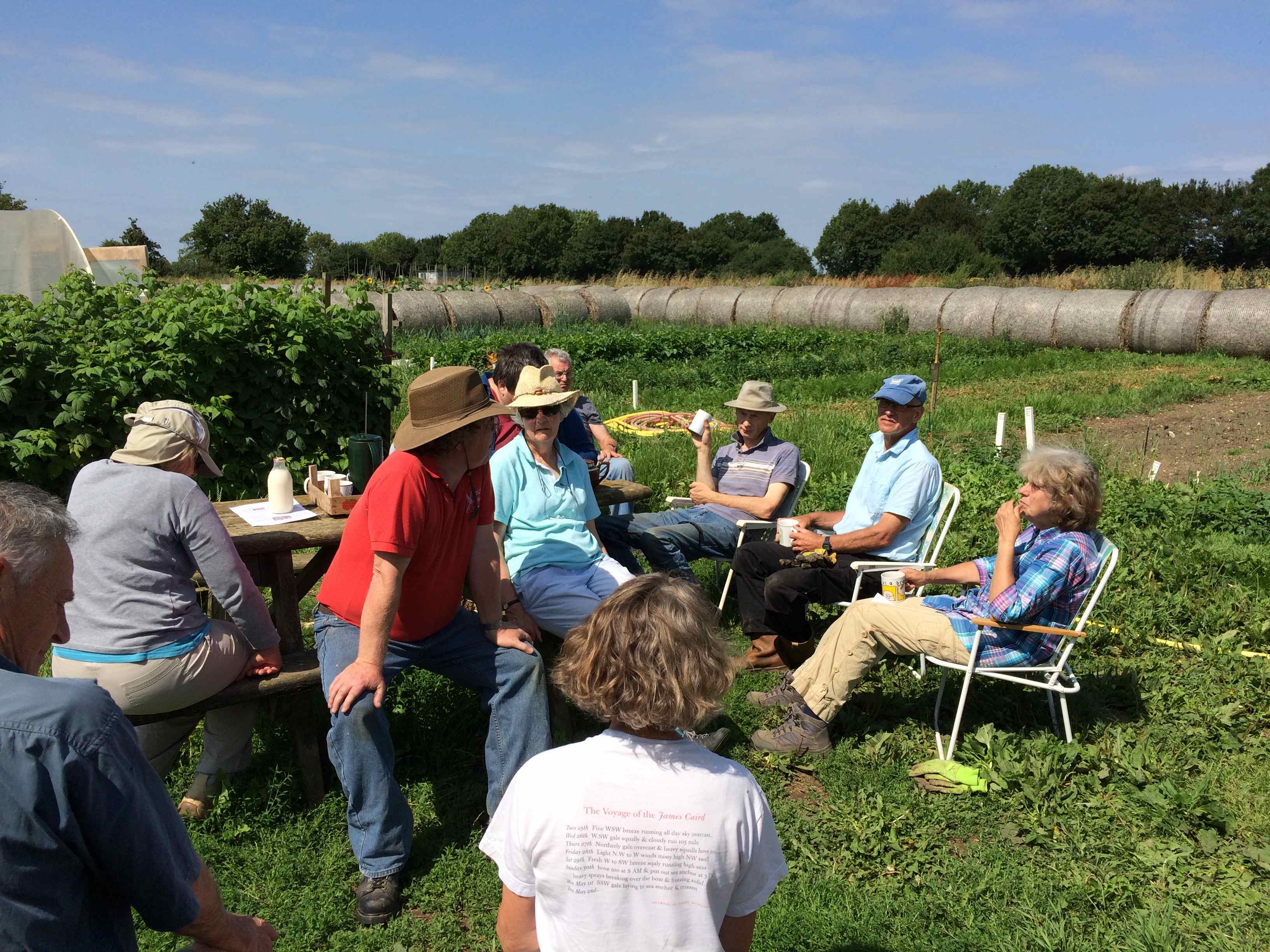
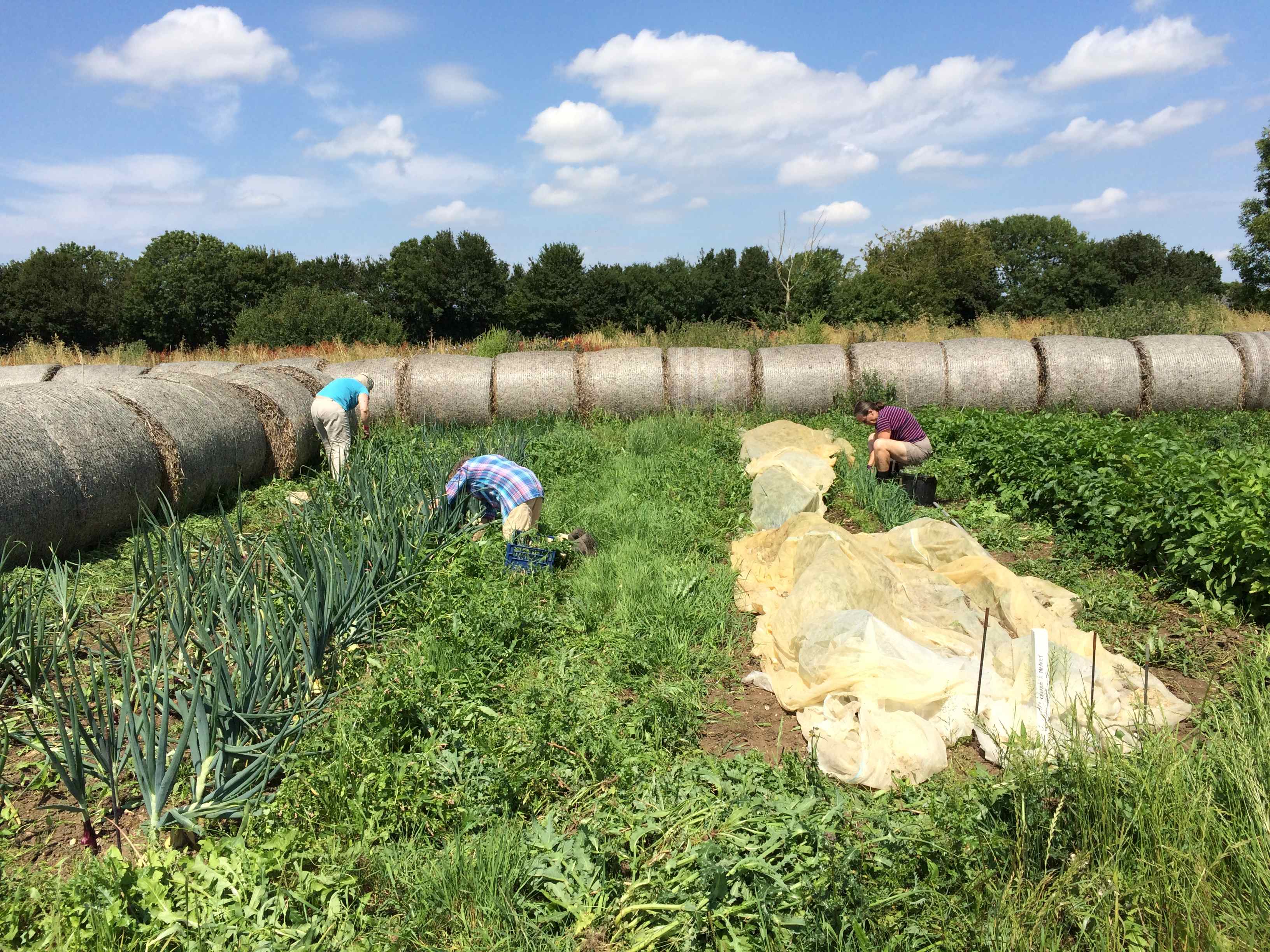
An important part of gardening is the tea/coffee break; a time to consider, discuss, plan and as here, enjoy the sunshine. 
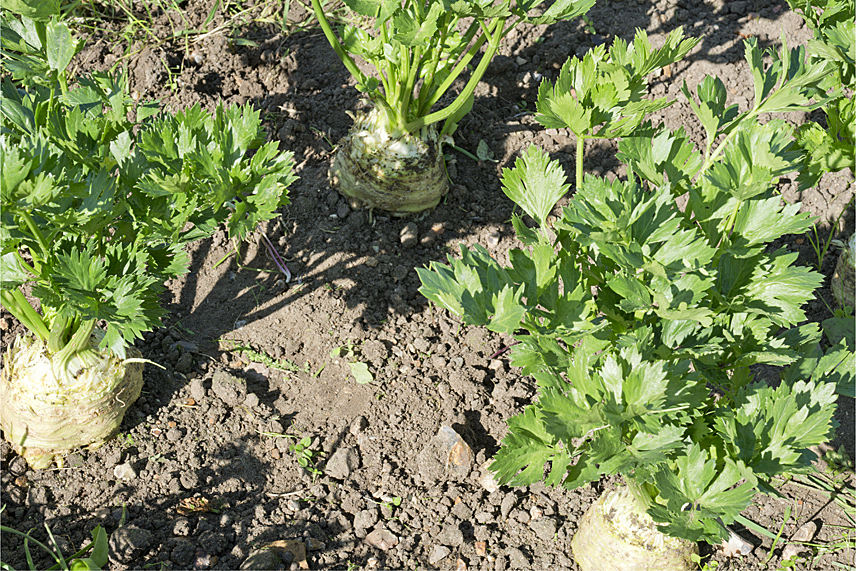
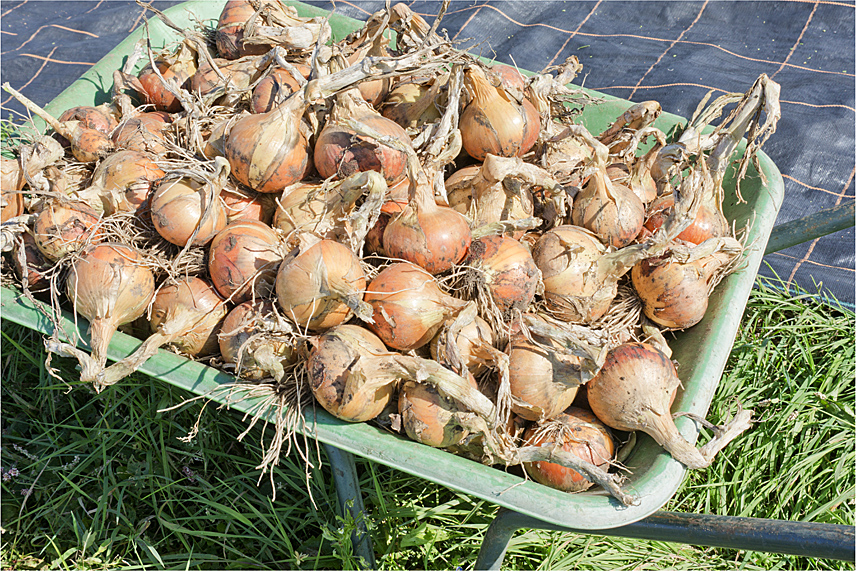
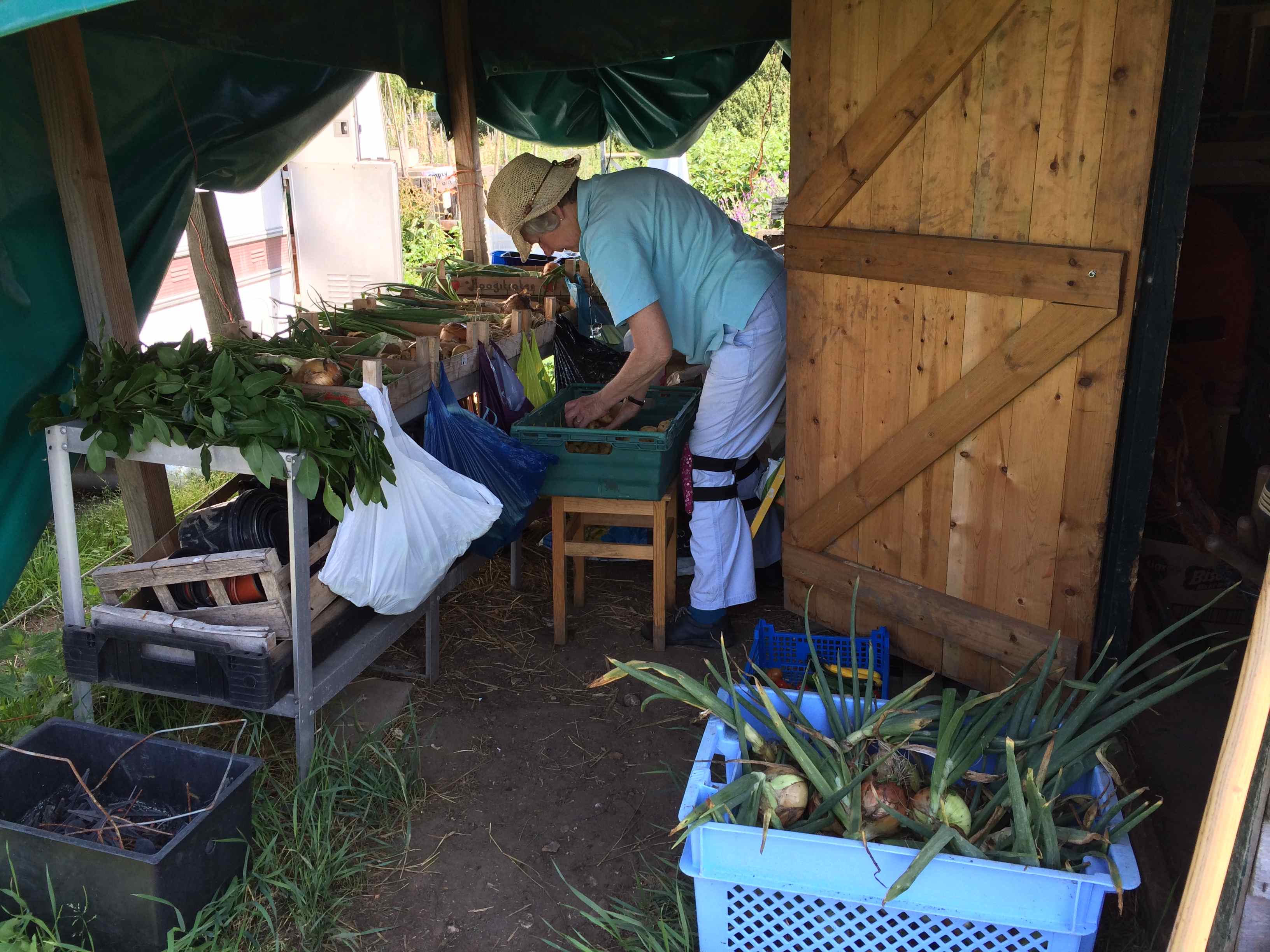
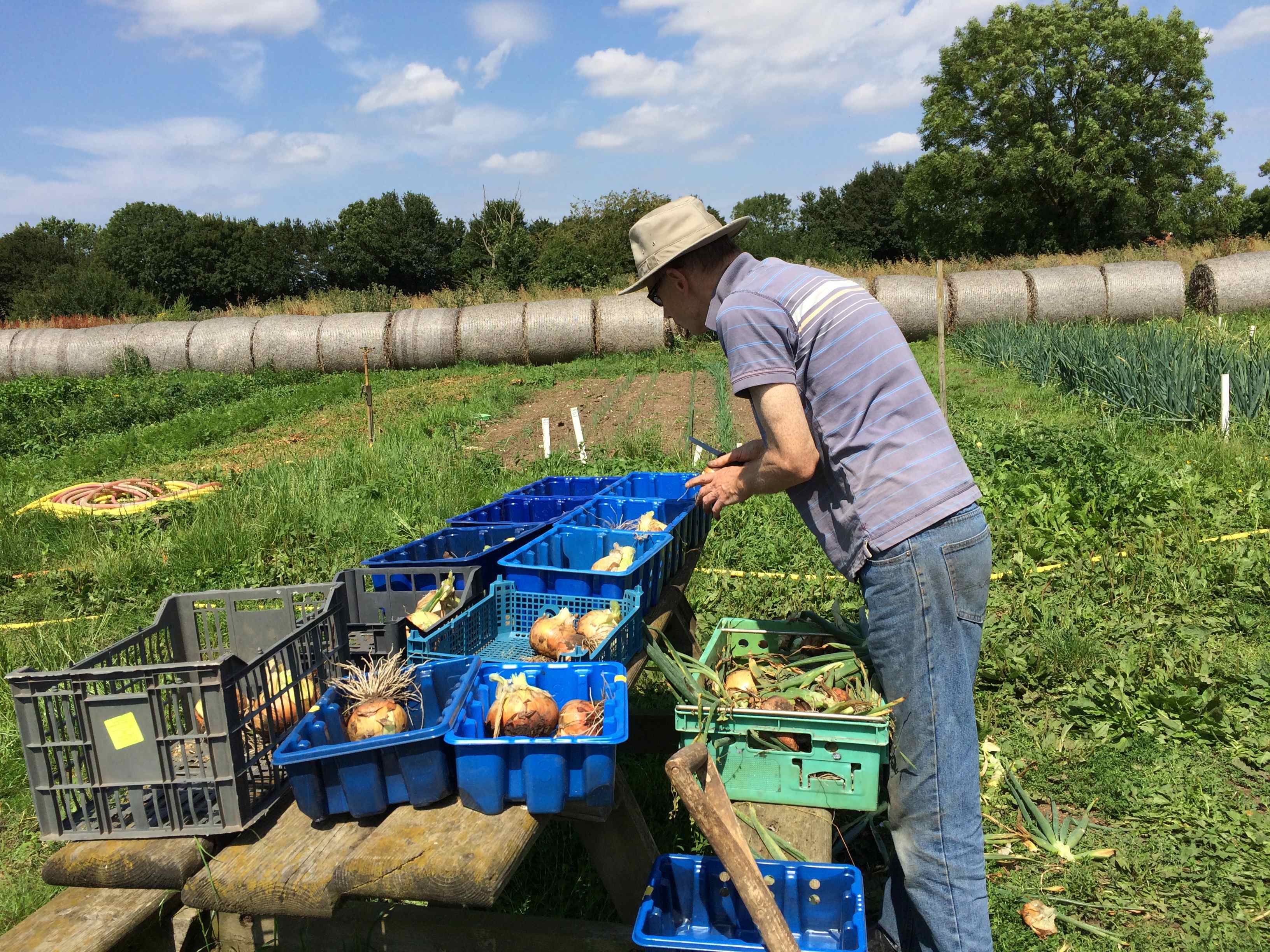
And just look at the produce, growing and harvested; super celeriac and enormous onions.
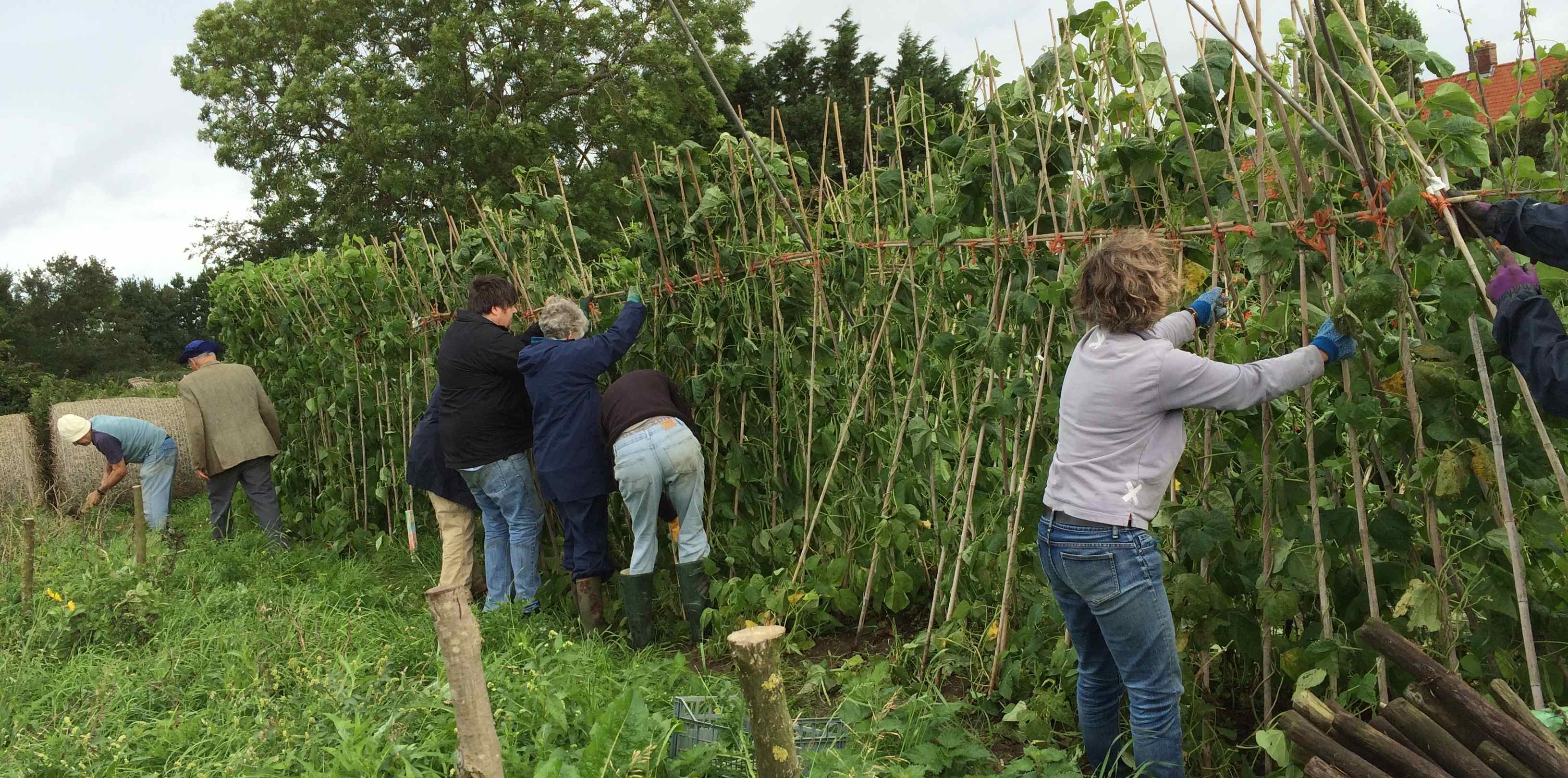
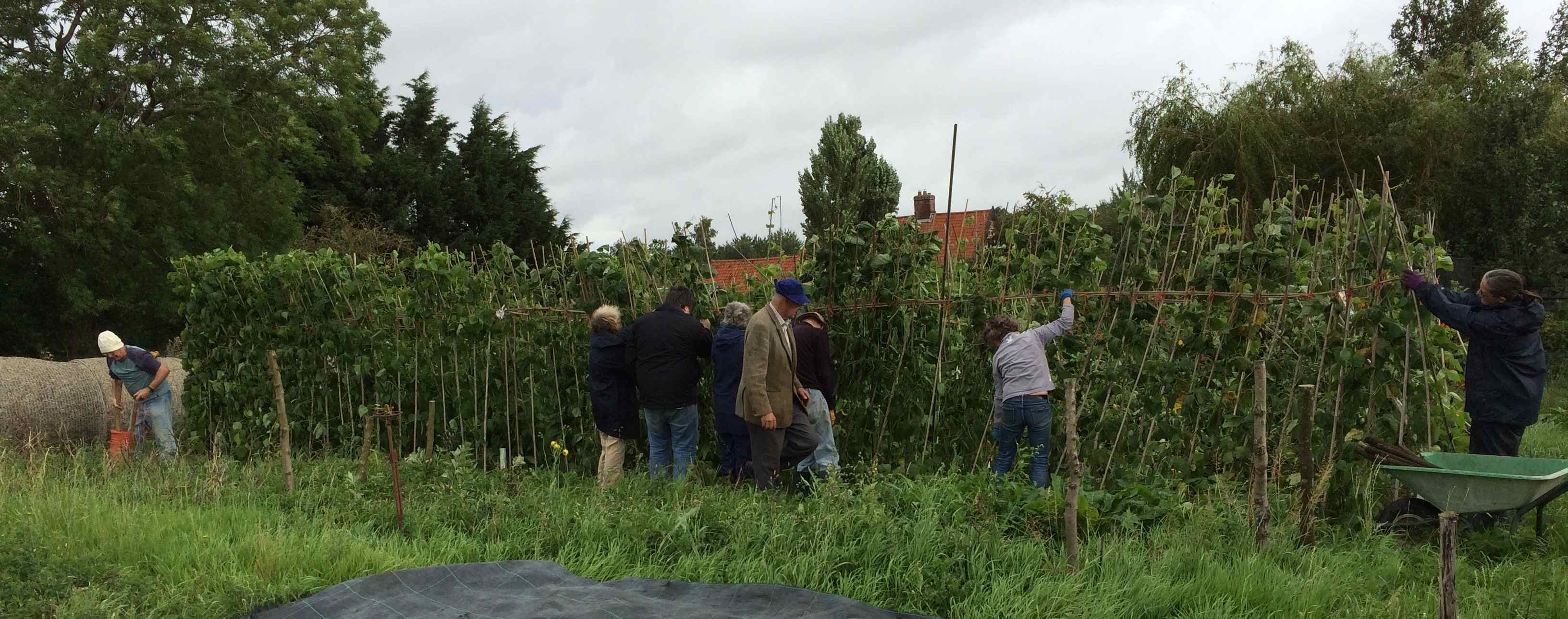
Yesterday was a day of freak weather in this area, and at about 4 pm a huge rainstorm and gust of wind blew down our rows of beans, heavily laden and ready for picking.
Today, at our work day, that was the main focus, and so we all worked together, raising the poles, putting in stakes and ropes to hold them, putting back those plants that had been ripped out of the ground.
We had a huge harvest of beans from the plants that had been damaged.
Jobs done since 7th May
• Planted Hispi cabbage seedlings through mypex and covered with enviromesh
• Prepared seed beds for more turnip & swede sowings
• Sowed more carrots for succession
• Removed outer blades from rotovator and rotovated between rows of strawberries in area C16-E17
• Removed spent broccoli plants to compost
• Rotovated area C22-E22 for planting of brassicas
• Continued weeding of onions, garlic and Broad Beans
• Strimmed weeds around poly and path near caravan
ToDos
• Plant remaining Hispi cabbage seedlings in Polytunnel 1
• Clear straw from area A17-B17 and rotovate for salad leaves
• Erect poles for Runner and French Beans
• Sow more turnip and swede seeds in area C21-E21
• Sow leek seeds in prepared area C9-E9
• Rotovate area C23-E23 for planting of brassicas
• Plant expected Kale seedlings through mypex in area C22-E22
• Continue strimming dandelions, nettles and other weeds before they form seed heads
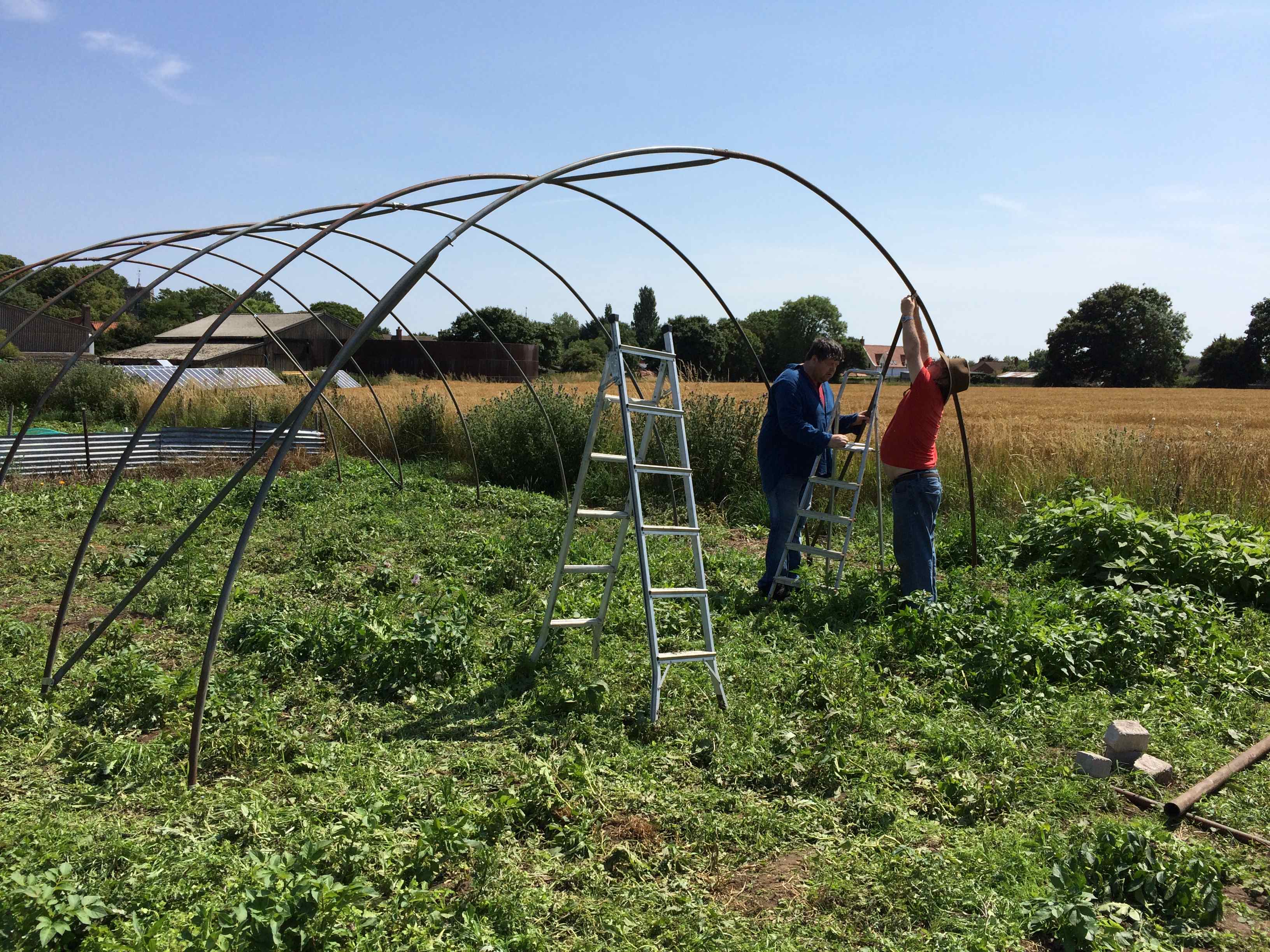
• Prepare for erection of new polytunnel frame
Harvested
• Broccoli tips
• Lettuce
• Salad leaves
• Chard
• Spinach
Monitoring
• Hydration of crops, particularly in polytunnels
We’ve been through a long winter and have come out the other end in very good shape. Our harvest is relatively small this week, as we enter the ‘hungry gap’, but we are well prepared for the busy season. All is clear and tidy, with lots of beds prepared for planting, well dug and manured. The compost bins are well managed, and will be used mostly in the polytunnels. We have two now and have a larger third one coming soon.
Last week saw two interesting astronomical phenomena, a ‘supermoon’ and the peak of the annual Perseid meteor shower.
The moon’s orbit around the Earth is elliptical rather than circular, which means that sometimes it is closer to the Earth and sometimes further away. As a result, the distance between the moon and the Earth varies by about 238,000 miles. If the moon is at its closest to the Earth when it is full it is referred to as a ‘supermoon’, whereas a full moon occurring at the furthest point of its orbit is referred to as a ‘micro moon’.
A supermoon occurs, on average, every 13 months, and appears around 16% larger than a micro moon, and over 40% brighter. Last week’s supermoon was bigger and brighter than it has been for 20 years, and astronomers feared that it would reduce the number of shooting stars visible during the Perseid meteor shower.
A meteor is a particle, often no larger than a grain of sand, travelling at thousands of miles per hour through the Earth’s atmosphere and burning up in the process. It appears as a streak of light moving rapidly across the sky. The Perseid meteors originate from the comet Swift-Tuttle. Comets contain ice, which becomes gas as the comet approaches the sun, and the exploding jets of gas pull dust out of the comet into its orbit. As the Earth passes through the orbit, which happens at the same time each year, the dust produces a meteor shower.
The Perseid meteor shower appears every year from mid-July until late August, peaking at around 12 August when it can produce more than 80-100 shooting stars per hour. It is named after the constellation Perseus, from which the meteors appear to radiate. Perseus was a Greek hero who killed the one-eyed Gorgon, Medusa. Medusa’s head was covered in snakes in place of hair, and anyone who looked at her was turned to stone. So Perseus used a mirror to slay her without looking directly at her.
By the fifth century BC most of the constellations had become associated with ancient myths. However, around AD 150 the Roman Ptolemy produced a catalogue in which he grouped over a thousand stars into 48 constellations, including Perseus. The catalogue gave the latitude and longitude of each star, its brightness, and the constellation to which it belonged.
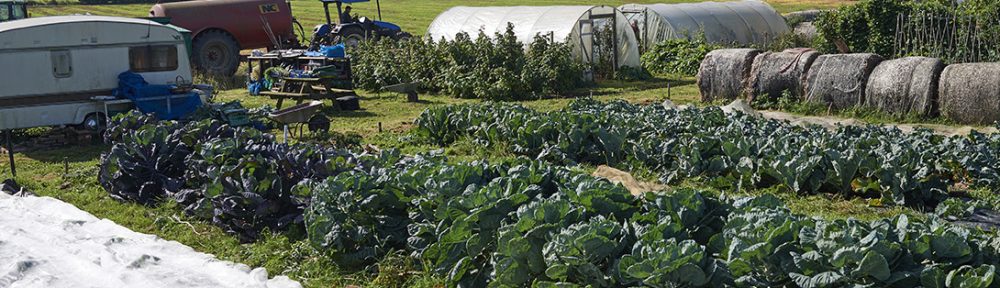
Yesterday was a lovely day on the Farm. Bumper harvest, everything looking great. Some children to amuse us.
David Mitchell, the farmer, had left us about 150 spare straw bales, which we rolled into lines to act as windbreaks, like a walled garden. Heavy work though!
I’ve been contemplating the most sustainable way to keep both my lawn and my longer grass under control. I’ve seen a new push mower advertised that claims that its ergonomic design makes it 60% easier to push than other mowers. But although it uses muscle power rather than petrol, it’s still a fairly complex piece of kit with parts that no doubt come from all over the globe and have a relatively high ecological footprint.
And there is an alternative. Hanging in the shed is an old fashioned English scythe. It’s rather a beautiful thing with a substantial steel blade attached to a long and gently curved wooden handle, referred to as the snath. I bought it several decades ago in Saffron Walden market, taking great care as I threaded my way back to the car park through the throng of busy shoppers! A kindly technician at Otley College set it up for me – the two handles can be positioned along the snath to suit the height of the user – but I never took time to learn to use it properly.
So last week I consulted local expert, Simon Lamb, who, like many modern-day scythe enthusiasts, uses an Austrian scythe. Sadly, the English scythe is less popular now because the Austrian blades are hand-forged and carefully shaped to increase their efficiency. They are also lighter, which means that the snath can be lighter. The Austrian factory that supplied the blade of my newly-purchased scythe has been operating for over 500 years.
Simon came and viewed my unkempt lawn and overgrown wildflower patch and showed me how a well-sharpened scythe wielded by an experienced hand can cut quickly and efficiently through grass and weeds. He made it look very easy, but then it was my turn. Surprisingly, I found it rather meditative. The gentle swinging action is not unlike a tai chi exercise and I felt disinclined to stop. The experience of guiding the blade through grass, adjusting to the vegetation as it changes across the site, builds a relationship with the garden that you don’t get from dominating it with a heavy petrol-driven piece of machinery. And there is great pleasure in developing the knowledge and skill needed to do a job well, especially when the alternative pollutes the atmosphere with noise and fumes.
Simon Fairlie, who imports and sells Austrian scythes, expresses it beautifully on his website when he says: “There is a magic in mowing which puts the rhythm of the body and the dynamics of a community in touch with the breathing of the earth”.
A hot morning on the Diss Community Farm. Everything looking great. A four box veg share this week!