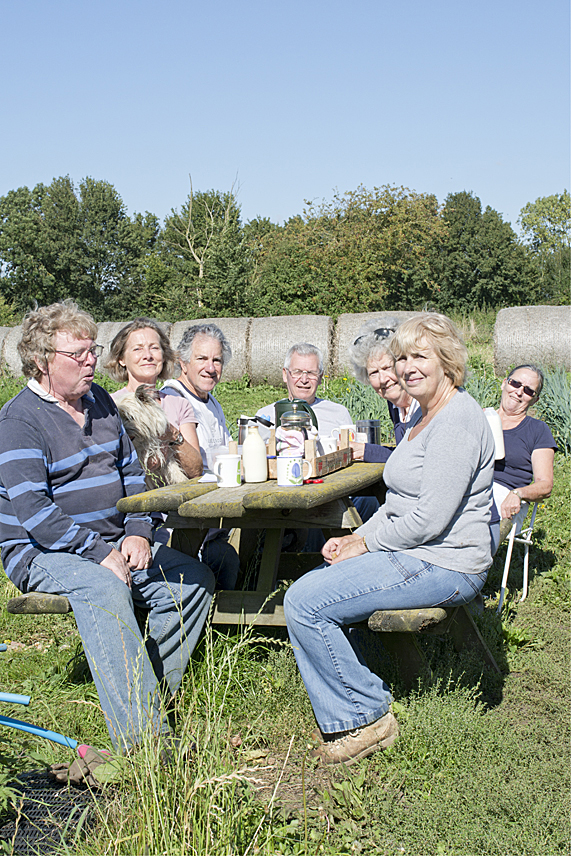
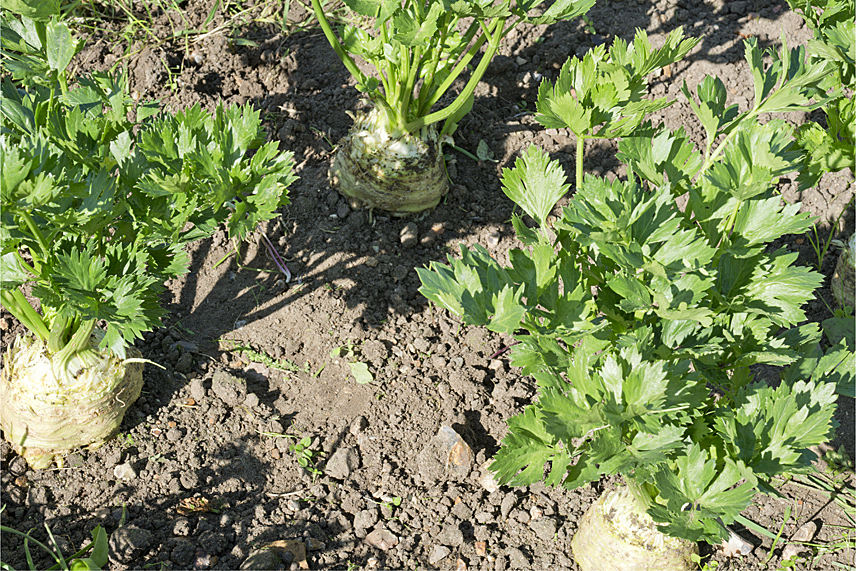
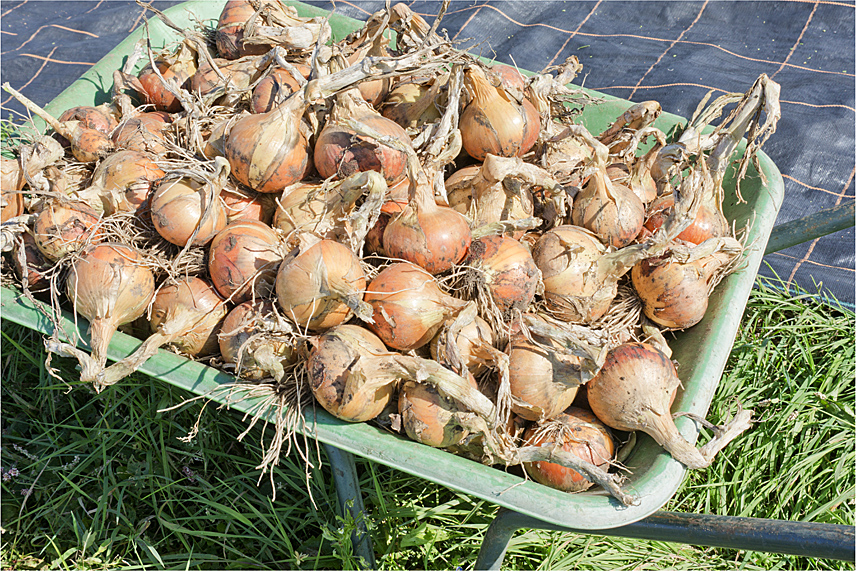
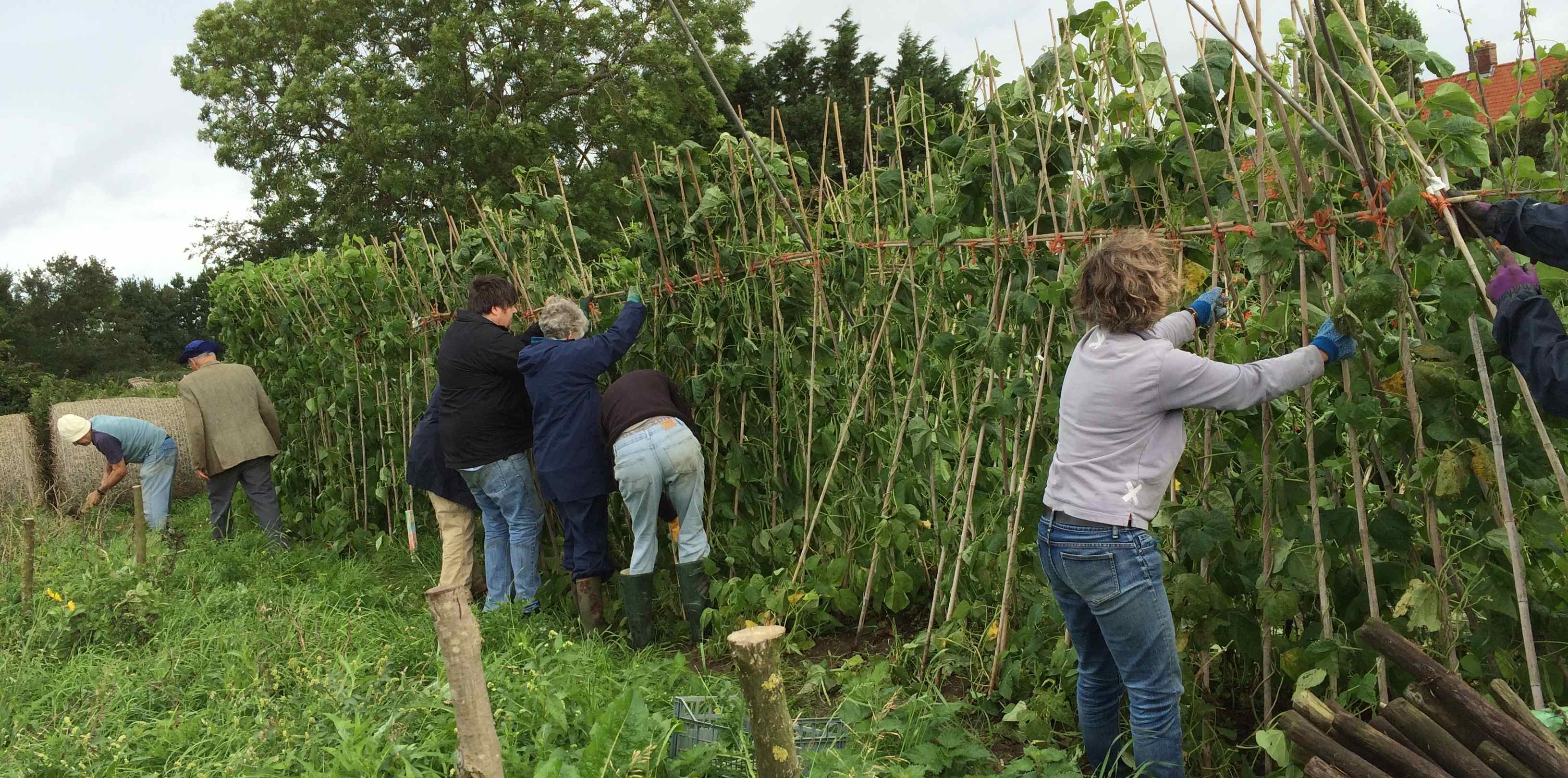
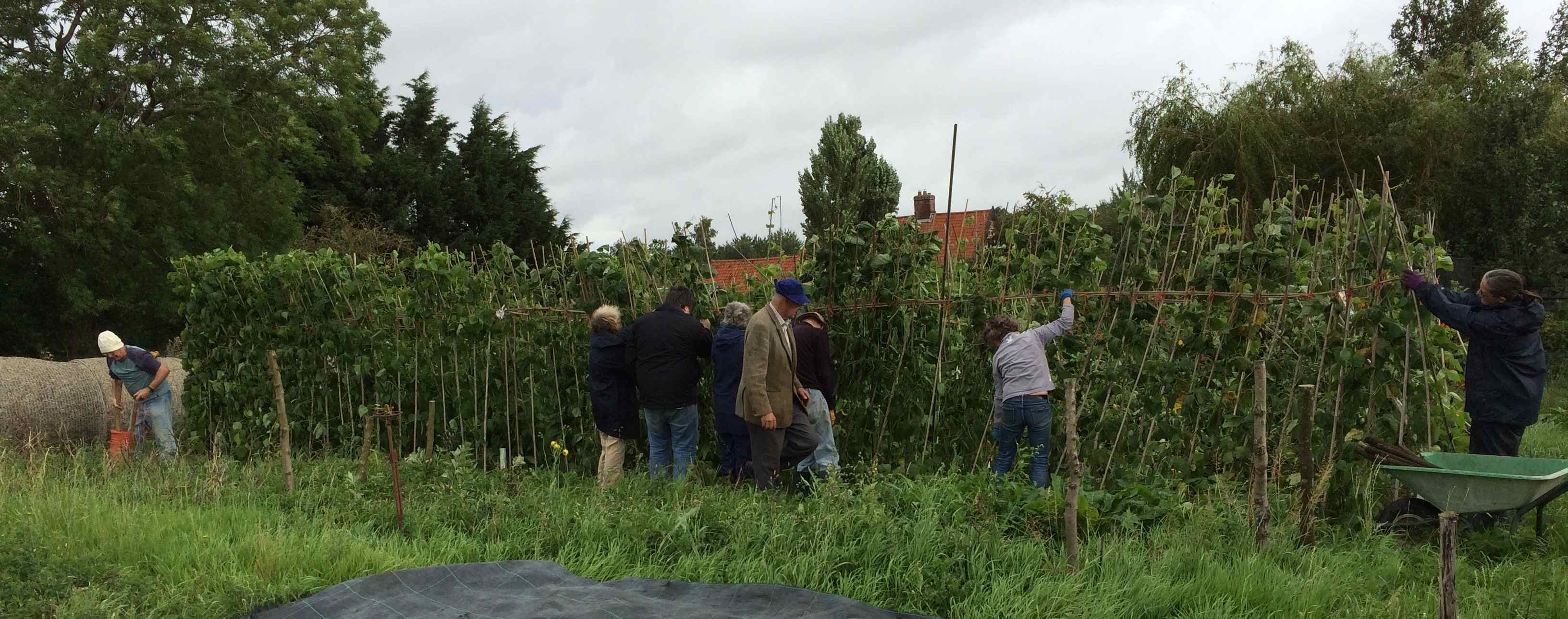
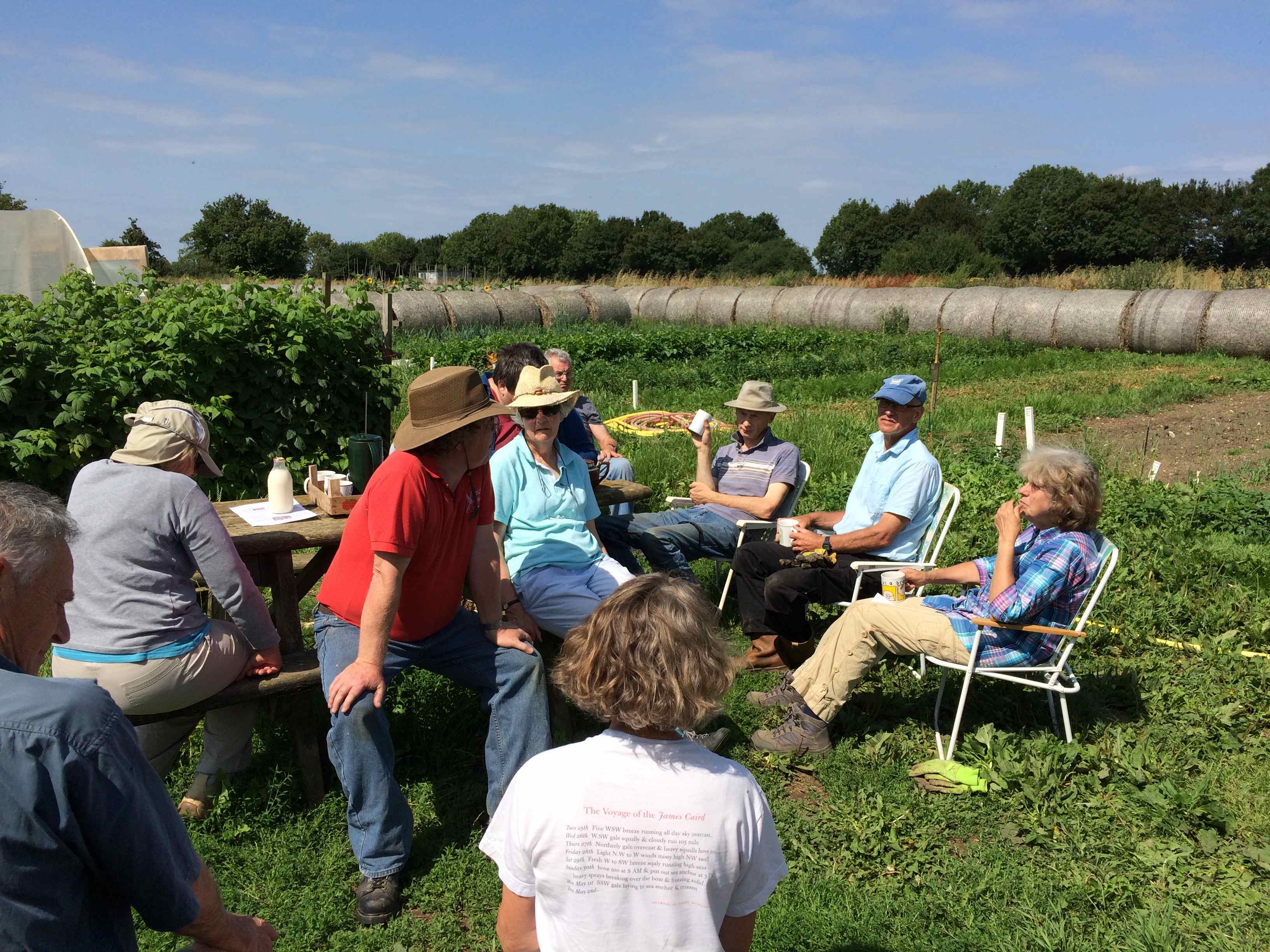
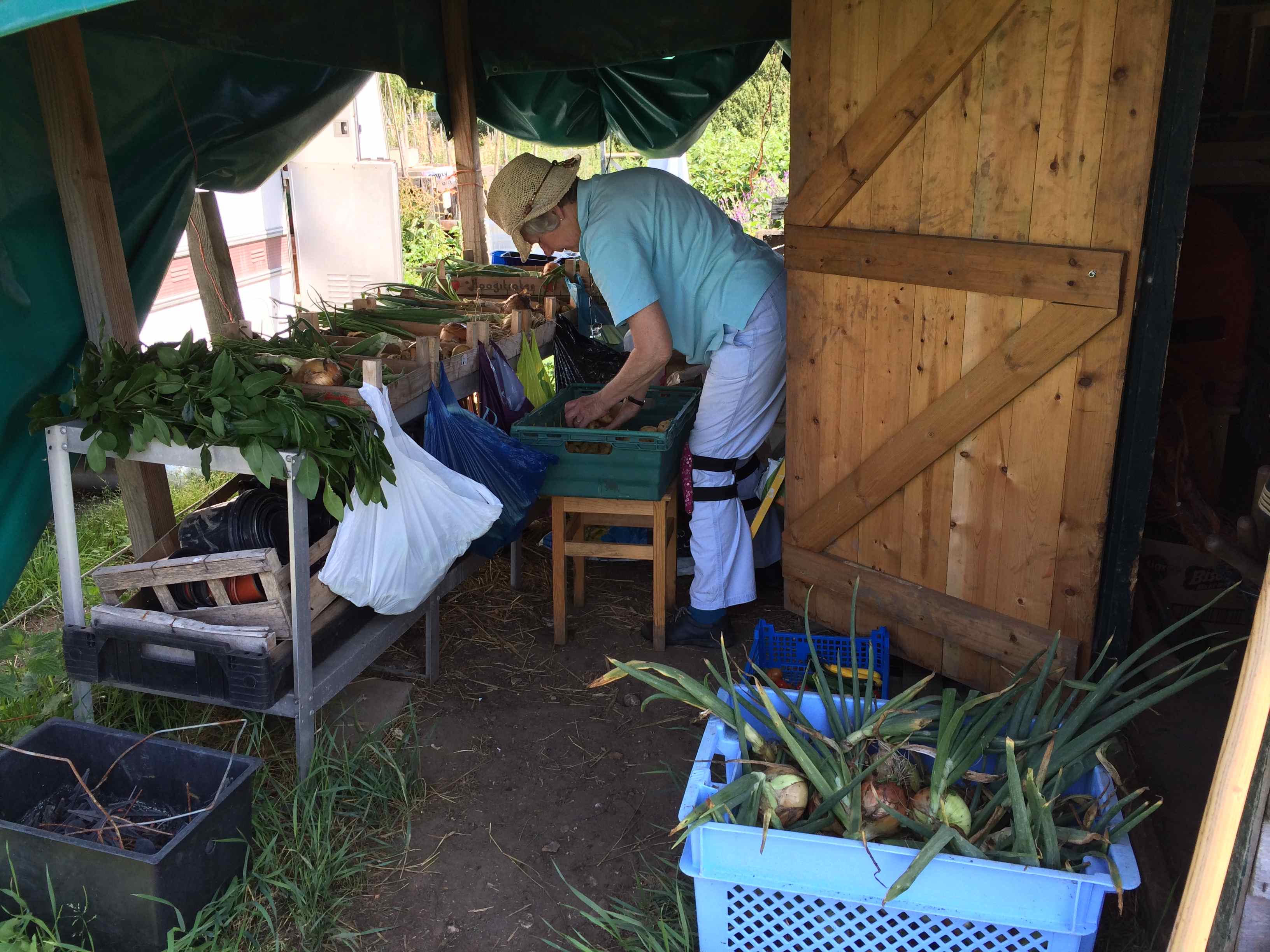
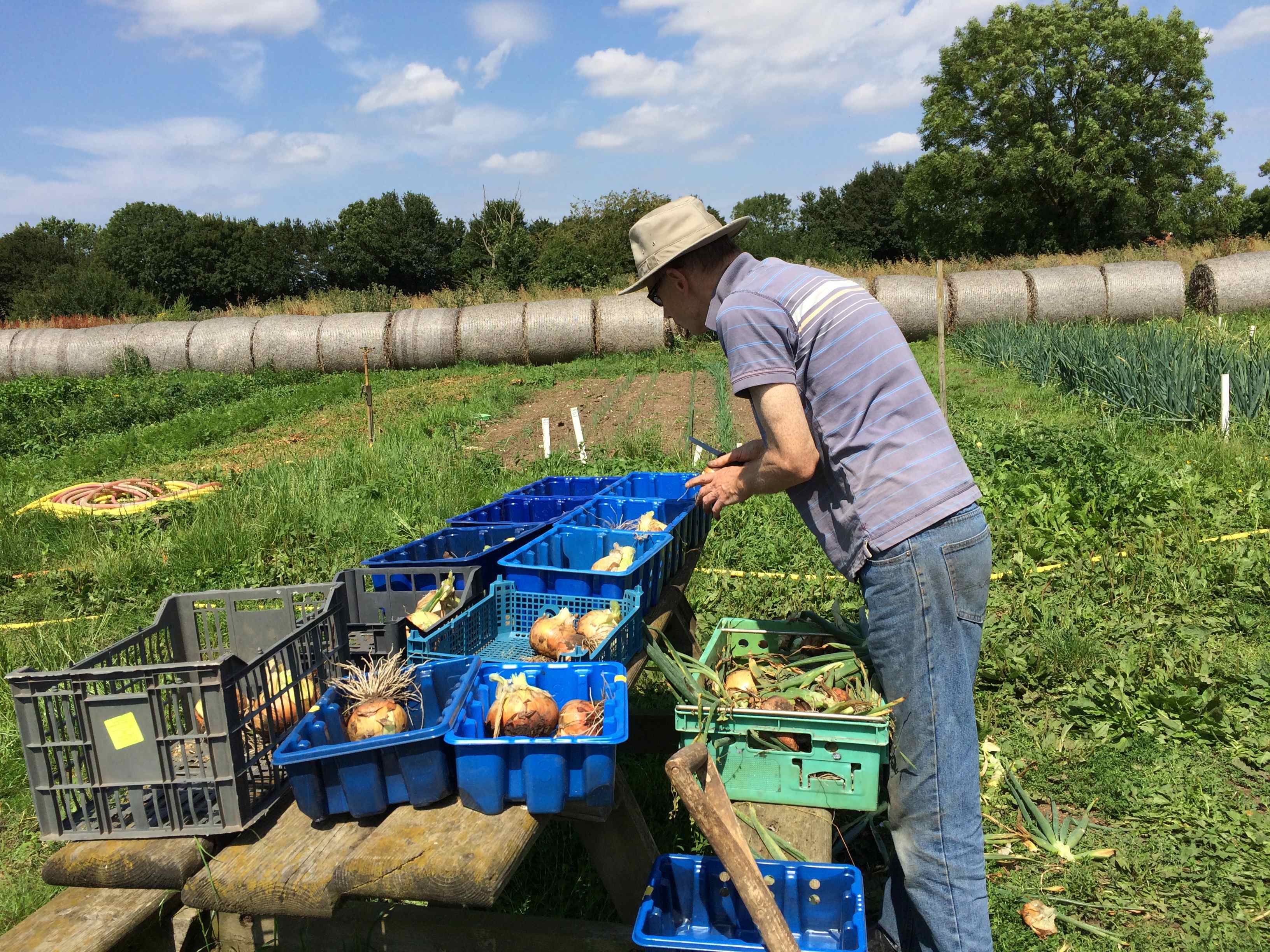
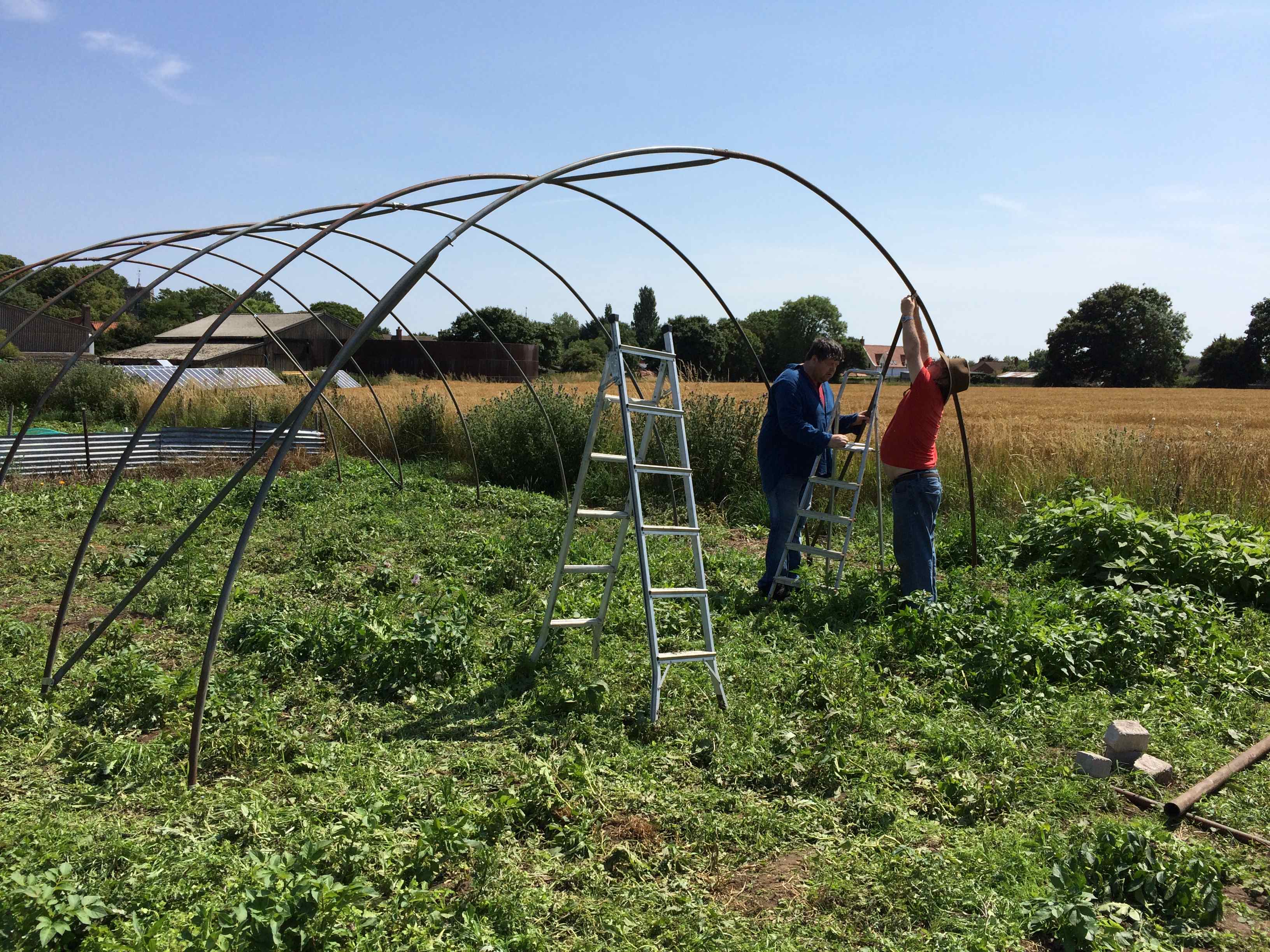
We’ve been through a long winter and have come out the other end in very good shape. Our harvest is relatively small this week, as we enter the ‘hungry gap’, but we are well prepared for the busy season. All is clear and tidy, with lots of beds prepared for planting, well dug and manured. The compost bins are well managed, and will be used mostly in the polytunnels. We have two now and have a larger third one coming soon.
Category Archives: Uncategorized
This week’s great harvest share!
Image
Supermoon outshines meteor shower
Last week saw two interesting astronomical phenomena, a ‘supermoon’ and the peak of the annual Perseid meteor shower.
The moon’s orbit around the Earth is elliptical rather than circular, which means that sometimes it is closer to the Earth and sometimes further away. As a result, the distance between the moon and the Earth varies by about 238,000 miles. If the moon is at its closest to the Earth when it is full it is referred to as a ‘supermoon’, whereas a full moon occurring at the furthest point of its orbit is referred to as a ‘micro moon’.
A supermoon occurs, on average, every 13 months, and appears around 16% larger than a micro moon, and over 40% brighter. Last week’s supermoon was bigger and brighter than it has been for 20 years, and astronomers feared that it would reduce the number of shooting stars visible during the Perseid meteor shower.
A meteor is a particle, often no larger than a grain of sand, travelling at thousands of miles per hour through the Earth’s atmosphere and burning up in the process. It appears as a streak of light moving rapidly across the sky. The Perseid meteors originate from the comet Swift-Tuttle. Comets contain ice, which becomes gas as the comet approaches the sun, and the exploding jets of gas pull dust out of the comet into its orbit. As the Earth passes through the orbit, which happens at the same time each year, the dust produces a meteor shower.
The Perseid meteor shower appears every year from mid-July until late August, peaking at around 12 August when it can produce more than 80-100 shooting stars per hour. It is named after the constellation Perseus, from which the meteors appear to radiate. Perseus was a Greek hero who killed the one-eyed Gorgon, Medusa. Medusa’s head was covered in snakes in place of hair, and anyone who looked at her was turned to stone. So Perseus used a mirror to slay her without looking directly at her.
By the fifth century BC most of the constellations had become associated with ancient myths. However, around AD 150 the Roman Ptolemy produced a catalogue in which he grouped over a thousand stars into 48 constellations, including Perseus. The catalogue gave the latitude and longitude of each star, its brightness, and the constellation to which it belonged.
Peak of the growing season!
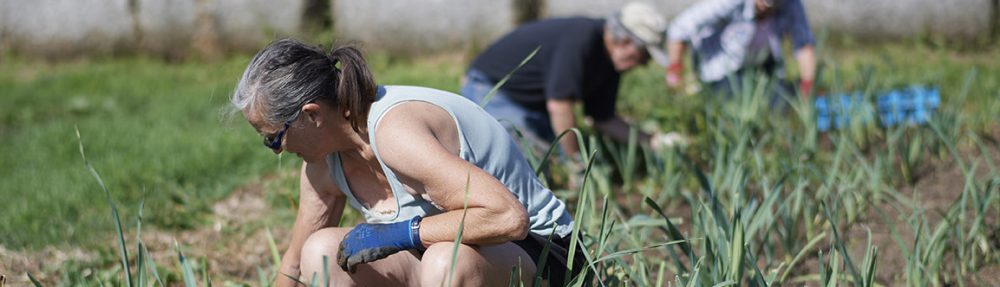
Yesterday was a lovely day on the Farm. Bumper harvest, everything looking great. Some children to amuse us.
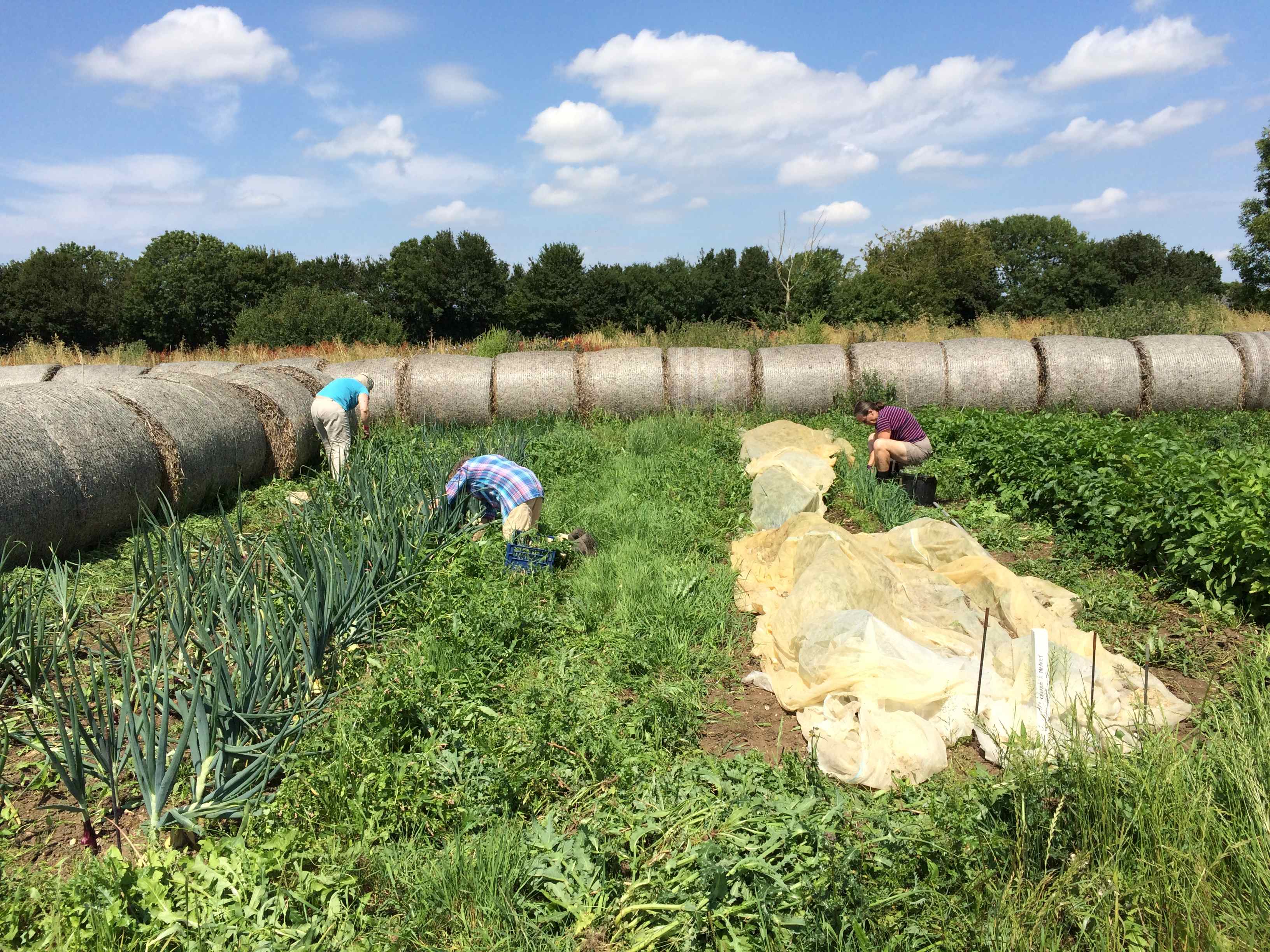
David Mitchell, the farmer, had left us about 150 spare straw bales, which we rolled into lines to act as windbreaks, like a walled garden. Heavy work though!
The Tao of grass cutting
I’ve been contemplating the most sustainable way to keep both my lawn and my longer grass under control. I’ve seen a new push mower advertised that claims that its ergonomic design makes it 60% easier to push than other mowers. But although it uses muscle power rather than petrol, it’s still a fairly complex piece of kit with parts that no doubt come from all over the globe and have a relatively high ecological footprint.
And there is an alternative. Hanging in the shed is an old fashioned English scythe. It’s rather a beautiful thing with a substantial steel blade attached to a long and gently curved wooden handle, referred to as the snath. I bought it several decades ago in Saffron Walden market, taking great care as I threaded my way back to the car park through the throng of busy shoppers! A kindly technician at Otley College set it up for me – the two handles can be positioned along the snath to suit the height of the user – but I never took time to learn to use it properly.
So last week I consulted local expert, Simon Lamb, who, like many modern-day scythe enthusiasts, uses an Austrian scythe. Sadly, the English scythe is less popular now because the Austrian blades are hand-forged and carefully shaped to increase their efficiency. They are also lighter, which means that the snath can be lighter. The Austrian factory that supplied the blade of my newly-purchased scythe has been operating for over 500 years.
Simon came and viewed my unkempt lawn and overgrown wildflower patch and showed me how a well-sharpened scythe wielded by an experienced hand can cut quickly and efficiently through grass and weeds. He made it look very easy, but then it was my turn. Surprisingly, I found it rather meditative. The gentle swinging action is not unlike a tai chi exercise and I felt disinclined to stop. The experience of guiding the blade through grass, adjusting to the vegetation as it changes across the site, builds a relationship with the garden that you don’t get from dominating it with a heavy petrol-driven piece of machinery. And there is great pleasure in developing the knowledge and skill needed to do a job well, especially when the alternative pollutes the atmosphere with noise and fumes.
Simon Fairlie, who imports and sells Austrian scythes, expresses it beautifully on his website when he says: “There is a magic in mowing which puts the rhythm of the body and the dynamics of a community in touch with the breathing of the earth”.
Late July on the Farm
A hot morning on the Diss Community Farm. Everything looking great. A four box veg share this week!
Summer twilight
At this time of year, with most of the summer before us, it seems paradoxical that the days are already shortening and the year progressing inexorably towards winter. But with last Saturday’s summer solstice, that is exactly what is happening. Once again the holly king and the oak king, rulers of the solar year, have fought their solstice battle, and the holly king now rules over these next six months of the declining sun.
Although considered to be the first day of summer, when the sun reaches its farthest point north of the equator, there is a seasonal temperature lag, which means that we have to wait for July and August for the hottest days. The cause of this lag is the role of the land and sea as natural storage heaters, absorbing the sun’s energy and gradually releasing it back into the atmosphere as heat. The oceans take longer to heat up compared to the land, and at this time of year are still relatively cool due to low spring temperatures.
But we can enjoy the long days and short nights while we wait for the dog days of summer. In fact, strictly speaking, there is no real night since twilight continues throughout the whole period from dawn until dusk. Twilight occurs when there is no direct sun but refracted sunlight still provides some light. Astronomically, morning twilight begins when the sun is 18° below the horizon, and ends in the evening when the sun drops back to 18° below the horizon. At the winter solstice, morning twilight lasts only from six until 8 am, and evening twilight from a quarter to four until 6 pm. But at the summer solstice evening twilight does not start until 9.20 pm and continues right through the night, ending at 4.30 in the morning.
Some animals are most active during twilight and these are referred to as crepuscular, the word derived from the Latin crepusculum, meaning twilight. Bats, for example, hunt during the twilight hours, thereby avoiding diurnal predators, although the species that emerge earliest from their daytime roosts are the fastest flyers and most able to avoid diurnal predators. The exceptional daytime vision of diurnal hunters such as kestrels diminishes rapidly as dusk light levels fall. By contrast, the large eyes of owls function well in poor light, and little owls in particular are crepuscular predators.
Ne’er cast a clout…
The mild weather last month saw me sally forth coatless on my early morning walks, ignoring the old adage to “ne’er cast a clout ‘til May be out”.
But does May refer here to the month or to the hawthorn blossom, which is also called May or Mayflower? There seems to be some dispute about this.
The Woodland Trust claims that the saying refers to the hawthorn, which flowers in May and early June, although first blossom is frequently recorded in April. There is an advantage to this assumption because the time of flowering of wild plants is affected by temperature and therefore provides a more reliable guide than a fixed date such as the first of June, when temperature may vary considerably. For example, since 1910, average May temperatures across England have ranged from 8.5°C in 1941 to 13°C in 1992 and 2008.
Indeed, it is thought that, due to climate change, spring in the UK is advancing, with plants such as the hawthorn flowering earlier. A 2002 study of 385 British plants found that the dates that they first flowered were, on average, 4½ days earlier than they had been in the previous 40 years.
On the other hand, the Oxford Dictionary of English Proverbs gives the first known record of this saying as the 1627 Spanish version, ‘Hasta Mayo no te quites el sayo’, meaning ‘Don’t leave off your coat until May’, referring to the month rather than the flower. But it is not unlikely that the saying originated in England before crossing the channel, so it is just possible that a translation error switched the meaning from the flower to the month.
Certainly hawthorn is a conveniently ubiquitous guide to your wardrobe choices. It is native to the UK and very common everywhere apart from northern Scotland. It is one of the most widespread hedgerow species, its dense thorn-bearing branches producing a very effective stock-proof hedge, but it will grow into a small tree with a height of around 30 feet when left uncut. It can be long-lived, and the Hethel Old Thorn in Hethel churchyard is reputed to be over 700 years old.
Skills, knowledge and consumerism
Three or four hours spent tying knots in the garden this weekend gave me time to reflect on the relationship between skills, knowledge and consumerism.
The knots in question are known as square lashing. You start with a clove hitch, then three lashing turns followed by three frapping turns, finishing up with a second clove hitch. The cause of all this activity was my decision to try out ‘square foot gardening’, an engineer-designed method of vegetable gardening that involves dividing raised beds into a grid of squares with sides one foot long, and planting different crops in each square. Having a surplus of bamboo canes, these seemed a good solution for constructing a grid to divide each of my five-foot square beds. I just needed something to hold the canes firmly in place where they crossed. My first thought was to look for something in the garden centre that would hold the canes securely, but then, in a book on knots, I discovered ‘square lashing’, a knot that is used to hold two poles at right angles to each other, and is ideal for trellises and similar structures.
Reflecting as I tied my knots (48 in total), I remembered when I first set up house and went to the supermarket for carpet cleaner, sink cleaner, furniture polish, floor cleaner, oven cleaner, window cleaner, and so on. The conveniently labelled bottles made it clear which product to use for which task, so no knowledge was required on my part. Since then I have learned more about the properties of basic materials and now do all my household tasks with lemon, vinegar, salt, bicarbonate of soda, linseed oil and beeswax.
Our grandparents had an inherited knowledge of simple household products, but with the advent of commercially-produced, tailored cleaning solutions, we were able to neglect this traditional expertise. But relying on these ‘scientifically proven’ formulations with their clearly printed instructions, we gradually lose the skills and wisdom accumulated over generations, creating an ever-increasing dependence on commercial products.
Yes, tying those 48 knots was time-consuming. But at the end of the task I not only had the grids I needed for my square foot garden; I had also gained a skill, together with the knowledge that a wide variety of knots are available to assist with many tasks in the garden and in the home. I wouldn’t have got that from the garden centre!
A warm spring morning on the Farm
Gallery
This gallery contains 5 photos.