Summer twilight

At this time of year, with most of the summer before us, it seems paradoxical that the days are already shortening and the year progressing inexorably towards winter. But with last Saturday’s summer solstice, that is exactly what is happening. Once again the holly king and the oak king, rulers of the solar year, have fought their solstice battle, and the holly king now rules over these next six months of the declining sun.

Although considered to be the first day of summer, when the sun reaches its farthest point north of the equator, there is a seasonal temperature lag, which means that we have to wait for July and August for the hottest days. The cause of this lag is the role of the land and sea as natural storage heaters, absorbing the sun’s energy and gradually releasing it back into the atmosphere as heat. The oceans take longer to heat up compared to the land, and at this time of year are still relatively cool due to low spring temperatures.

But we can enjoy the long days and short nights while we wait for the dog days of summer. In fact, strictly speaking, there is no real night since twilight continues throughout the whole period from dawn until dusk. Twilight occurs when there is no direct sun but refracted sunlight still provides some light. Astronomically, morning twilight begins when the sun is 18° below the horizon, and ends in the evening when the sun drops back to 18° below the horizon. At the winter solstice, morning twilight lasts only from six until 8 am, and evening twilight from a quarter to four until 6 pm. But at the summer solstice evening twilight does not start until 9.20 pm and continues right through the night, ending at 4.30 in the morning.

Some animals are most active during twilight and these are referred to as crepuscular, the word derived from the Latin crepusculum, meaning twilight. Bats, for example, hunt during the twilight hours, thereby avoiding diurnal predators, although the species that emerge earliest from their daytime roosts are the fastest flyers and most able to avoid diurnal predators. The exceptional daytime vision of diurnal hunters such as kestrels diminishes rapidly as dusk light levels fall. By contrast, the large eyes of owls function well in poor light, and little owls in particular are crepuscular predators.

Ne’er cast a clout…

The mild weather last month saw me sally forth coatless on my early morning walks, ignoring the old adage to “ne’er cast a clout ‘til May be out”.

But does May refer here to the month or to the hawthorn blossom, which is also called May or Mayflower? There seems to be some dispute about this.

The Woodland Trust claims that the saying refers to the hawthorn, which flowers in May and early June, although first blossom is frequently recorded in April. There is an advantage to this assumption because the time of flowering of wild plants is affected by temperature and therefore provides a more reliable guide than a fixed date such as the first of June, when temperature may vary considerably. For example, since 1910, average May temperatures across England have ranged from 8.5°C in 1941 to 13°C in 1992 and 2008.

Indeed, it is thought that, due to climate change, spring in the UK is advancing, with plants such as the hawthorn flowering earlier. A 2002 study of 385 British plants found that the dates that they first flowered were, on average, 4½ days earlier than they had been in the previous 40 years.

On the other hand, the Oxford Dictionary of English Proverbs gives the first known record of this saying as the 1627 Spanish version, ‘Hasta Mayo no te quites el sayo’, meaning ‘Don’t leave off your coat until May’, referring to the month rather than the flower. But it is not unlikely that the saying originated in England before crossing the channel, so it is just possible that a translation error switched the meaning from the flower to the month.

Certainly hawthorn is a conveniently ubiquitous guide to your wardrobe choices. It is native to the UK and very common everywhere apart from northern Scotland. It is one of the most widespread hedgerow species, its dense thorn-bearing branches producing a very effective stock-proof hedge, but it will grow into a small tree with a height of around 30 feet when left uncut. It can be long-lived, and the Hethel Old Thorn in Hethel churchyard is reputed to be over 700 years old.

Skills, knowledge and consumerism

Three or four hours spent tying knots in the garden this weekend gave me time to reflect on the relationship between skills, knowledge and consumerism.

The knots in question are known as square lashing. You start with a clove hitch, then three lashing turns followed by three frapping turns, finishing up with a second clove hitch. The cause of all this activity was my decision to try out ‘square foot gardening’, an engineer-designed method of vegetable gardening that involves dividing raised beds into a grid of squares with sides one foot long, and planting different crops in each square. Having a surplus of bamboo canes, these seemed a good solution for constructing a grid to divide each of my five-foot square beds. I just needed something to hold the canes firmly in place where they crossed. My first thought was to look for something in the garden centre that would hold the canes securely, but then, in a book on knots, I discovered ‘square lashing’, a knot that is used to hold two poles at right angles to each other, and is ideal for trellises and similar structures.

Reflecting as I tied my knots (48 in total), I remembered when I first set up house and went to the supermarket for carpet cleaner, sink cleaner, furniture polish, floor cleaner, oven cleaner, window cleaner, and so on. The conveniently labelled bottles made it clear which product to use for which task, so no knowledge was required on my part. Since then I have learned more about the properties of basic materials and now do all my household tasks with lemon, vinegar, salt, bicarbonate of soda, linseed oil and beeswax.

Our grandparents had an inherited knowledge of simple household products, but with the advent of commercially-produced, tailored cleaning solutions, we were able to neglect this traditional expertise. But relying on these ‘scientifically proven’ formulations with their clearly printed instructions, we gradually lose the skills and wisdom accumulated over generations, creating an ever-increasing dependence on commercial products.

Yes, tying those 48 knots was time-consuming. But at the end of the task I not only had the grids I needed for my square foot garden; I had also gained a skill, together with the knowledge that a wide variety of knots are available to assist with many tasks in the garden and in the home. I wouldn’t have got that from the garden centre!

Early spring rhubarb

At a time of year when there’s not much fruit to harvest in the garden, rhubarb that has been forced for an early crop is a rare treat. Of course, rhubarb is not technically a fruit but a vegetable, and the part that is eaten is the long fleshy petiole or leafstalk. It is rich in vitamin C and fibre, and it contains reasonable amounts of vitamins A and K, potassium and calcium.

During January, rhubarb is forced by covering the crowns with a forcing pot, large bucket, or anything that will exclude the light. The dormant buds inside the pot are then insulated with straw or dry leaves. Champagne is an early variety that forces well, while Victoria is also good for forcing and is a heavy cropper.

In Yorkshire, rhubarb is forced commercially by growing in forcing sheds, where it is harvested in mid-winter by candlelight.

From late winter onwards, harvest rhubarb stems by pulling them outwards with a slight twist. Pick only the young pink stems, before they become green and thick, coarser and more acidic. Allow plenty of leaves to remain on the plant to continue to photosynthesise and encourage further growth. During a glut, freeze surplus rhubarb by cutting into chunks, open-freezing and then storing in bags. Rhubarb will continue to crop until midsummer, but forced crowns should be left for 2-3 years to recover before they are forced again.

At the end of the season, around mid-autumn, when the leaves start to die back, remove the old foliage and expose the crowns to frost. Divide the crowns every 4-5 years in mid-spring, just as the soil is warming up. Don’t pick any stems from these plants until the second year so that they have time to develop.

Forced rhubarb is mild, sweet and tender and needs less cooking than the main crop. Stew or roast with orange or ginger for an easy dessert.

Rhubarb leaves contain oxalic acid and, in consequence, are poisonous. Exploiting this characteristic, the leaves have traditionally been used to make an insecticide to control aphids on non-edible plants such as roses, and planting rhubarb near aquilegias is said to keep red spider mite away. Rhubarb also deters blackspot from roses, while small pieces of rhubarb included in the planting hole are said to protect brassicas from clubroot.

Northern lights

Last month Norfolk was treated to a rare sight, the Aurora Borealis. The spectacular show was due to a coronal mass ejection from the sun. This is a fast moving cloud of charged particles emitted when a sunspot erupts, producing a solar flare. The charged particles interact with atoms of the Earth’s atmospheric gases near the magnetic poles, and the burning gases create a display of ethereal coloured lights – oxygen produces green and yellow lights, nitrogen produces blue, and red and violet can also be seen. The aurora is usually only visible above the north and south magnetic poles, but under the right conditions can be seen at other latitudes. The display in Norfolk is said to have started around 8 pm in the evening and to have lasted for several hours.

The Aurora Borealis is also known as the Northern Lights, and the equivalent in the southern hemisphere, the Aurora Australis, is known as the Southern Lights. Other names for the Northern Lights include Merry Dancers and Lord Derwentwater’s Lights. This last name refers to James Radclyffe, the third Earl of Derwentwater, who was an English Jacobite beheaded for rebellion on 24 February 1716, when the lights were said to be unusually brilliant.

There are many myths associated with the Northern Lights. They take the name Aurora from the Roman goddess of the dawn who flies across the sky every morning to announce the arrival of her brother, Sol, the sun. Her sister is Luna, the moon, and the morning dew is referred to as Aurora’s tears. According to Brewer’s 1870 Dictionary of Phrase and Fable, the lights were ascribed by “northern savages” to the merriment of ghosts, while Finnish legend suggests that the lights are caused by magical fire-foxes whose tails brush the sky, creating sparks. The Saami people of Lapland believed that the lights were the energies of the souls of the departed, or the fire of torches lighting their way to heaven. In Norway they were thought to be the spirits of old maids dancing in the sky, the Vikings called them the bridge to Valhalla, and the Australian aborigines interpreted them as the gods dancing. The lights may also have been the origin of early dragon legends from China and Europe, where they were interpreted as the dragons’ firey breath.

If you missed out this time you may like to use Lancaster University’s AuroraWatch service. Sign up at http://aurorawatch.lancs.ac.uk/alerts and they will alert you by email or Twitter when an aurora is likely to be visible from the UK.

Connections with the land

February 6 was Waitangi Day in New Zealand, commemorating the signing of the Treaty of Waitangi in 1840. The treaty sought to formalise the relationship between the colonising British and the native Maori people, making New Zealand part of the British Empire, establishing a British Governor there, and guaranteeing Maoris rights to their land. However, Maori beliefs about the ownership and use of land are very different from those that were prevalent in Britain in the nineteenth century. Their spirituality is strongly associated with the land, and they believe there is a deep kinship between humans and the natural world. They appoint individuals or groups as guardians to protect the land, while customary practices maintain a balance between the human communities and nature.

This relationship with the land and nature is found in many indigenous cultures. Humans, nature and spirits have a place in an ordered universe, and the environment is protected by religion and ritual as well as by traditional management practices. Together with an intimate knowledge of the environment, this enables indigenous cultures to co-exist with, rather than exploit, nature. The land also gives indigenous people a sense of belonging to a place, and connects them with their past, present and future – their past because it is the home of their ancestors, the present because it provides all of their material needs, and the future because it is a legacy that they hold in trust for their children and grandchildren.

The importance of the land is reflected in the statement by the World Council of Indigenous Peoples that “next to shooting indigenous peoples, the surest way to kill us is to separate us from our part of the Earth”.

Many of us in the Western world do not have such an intimate connection with the land. We may not live in the same place as our forebears, and our children may not remain where we are living now. We do not rely on the area where we live for our material needs since much of our food and other provisions are produced in, and imported from, faraway places. We do not feel a sense of kinship with the natural world but, instead, see it as a source of material assets with economic value.

However, the Western world is increasingly recognising the value of traditional land management practices, and is seeking to protect them through “community protocols” that formalise in written form the customary laws that have sustained biodiversity for generations.

Winter work on the Community Farm

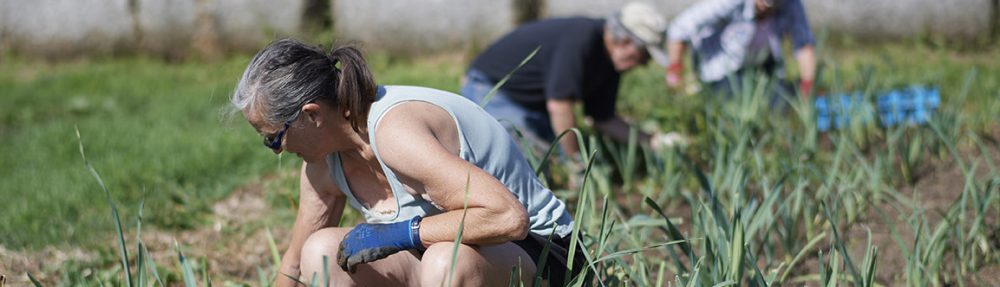
Today was a cold, wet, muddy winter day at the Diss Community Farm, but what does that matter if you are having fun? Most of the regulars turned up to do some harvesting, planting, and generally getting prepared for the next growing season. It is looking very neat and organised these days, a far cry from last year when we were overwhelmed. Lots of straw between the rows, membrane down to prevent weeds, manure ready. Had to remember not to worker harder than my body is comfortable with. This is not a competition.

This slideshow requires JavaScript.

Weather predictions

January is a time of new beginnings, when many people set – and break! – their new year resolutions. The month is named after the god Janus, who had two faces, signifying that January looks back over the past year as well as looking forward to the new year.

Despite the blustery weather, the first week of January has been mild, but this does not bode well for the spring. According to several old proverbs, “March in January, January in March” or, worse still, “If January’s calends be summerly gay, ‘twill be winterly weather till the calends of May.” Another proverb suggests that “January commits the fault and May bears the blame”, but this is thought to refer to human behaviour as much as to the weather. But “if the grass looks green in January”, as it undoubtedly does this year, “it will grow the worse all the year”.

It is interesting to consider the accuracy of these old sayings. Some are undoubtedly true, especially those that make short-term predictions. For example, the Met Office website explains the saying “Red sky at night, shepherd’s delight, red sky in the morning, shepherd’s warning”. Dust and small particles, trapped in the atmosphere by high pressure, scatter blue light leaving only red light to tint the sky. If this happens at sunset it shows that the high pressure is moving in from the west, but in the morning a red sky shows that the high pressure weather system has already moved east and the good weather has past.

A longer-term prediction is the saying “Oak before ash, we’ll have a splash, ash before oak, we’ll have a soak”. The Woodland Trust looked at the accuracy of this and found that the breaking of buds on the trees depends on spring temperatures, but records collected over 250 years suggest there is no correlation between these temperature and summer rainfall.

Another longer-term prediction is the suggestion that the weather on St Swithun’s Day (15 July) predicts the weather for the following forty days. This prediction might have some justification since around the middle of July the jet stream takes one of two paths. If it moves south it pulls in cold air from the Arctic bringing cloud and rain, while if it moves north it pulls in sub-tropical air that brings warm and sunny weather. However, while a general trend may be indicated, the Met Office reports that there hasn’t been forty days of rain since records began!

Day on the Farm 19th December with mulled wine

We had a good day at Winfarthing and came home with sprouts, parsnips, celeariac, leeks, leaves, and probably slugs! There are still some potatoes in the shed that haven’t been taken.

We also celebrated Christmas with some mulled wine and for those who wanted the recipe, it’s below.

1/2 (as in half) pint water 4 oz sugar 4 cloves 2 in stick cinnamon

1 or 2 lemons, thinly sliced 1 bottle of red wine.

Boil water, sugar and spices together. Add the lemons, stir and leave to stand for 10 minutes. Pour back into the saucepan and add the red wine. Heat, but do not boil. Strain the wine into a bowl and serve hot. Makes about 1 1/2 pts.

Jeff and Frances