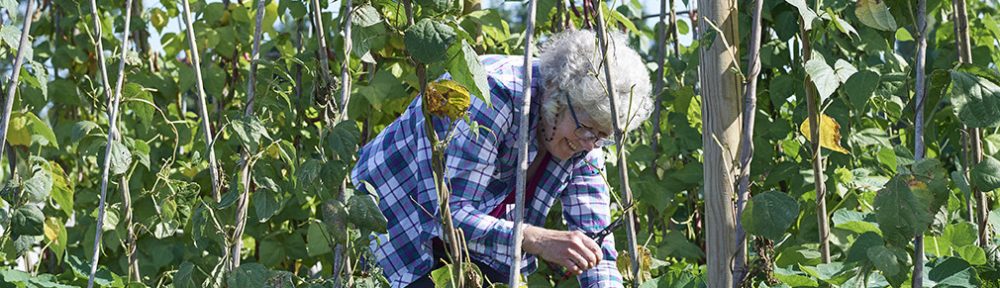
Today was a cold, wet, muddy winter day at the Diss Community Farm, but what does that matter if you are having fun? Most of the regulars turned up to do some harvesting, planting, and generally getting prepared for the next growing season. It is looking very neat and organised these days, a far cry from last year when we were overwhelmed. Lots of straw between the rows, membrane down to prevent weeds, manure ready. Had to remember not to worker harder than my body is comfortable with. This is not a competition.
Author Archives: garyalex
Weather predictions
January is a time of new beginnings, when many people set – and break! – their new year resolutions. The month is named after the god Janus, who had two faces, signifying that January looks back over the past year as well as looking forward to the new year.
Despite the blustery weather, the first week of January has been mild, but this does not bode well for the spring. According to several old proverbs, “March in January, January in March” or, worse still, “If January’s calends be summerly gay, ‘twill be winterly weather till the calends of May.” Another proverb suggests that “January commits the fault and May bears the blame”, but this is thought to refer to human behaviour as much as to the weather. But “if the grass looks green in January”, as it undoubtedly does this year, “it will grow the worse all the year”.
It is interesting to consider the accuracy of these old sayings. Some are undoubtedly true, especially those that make short-term predictions. For example, the Met Office website explains the saying “Red sky at night, shepherd’s delight, red sky in the morning, shepherd’s warning”. Dust and small particles, trapped in the atmosphere by high pressure, scatter blue light leaving only red light to tint the sky. If this happens at sunset it shows that the high pressure is moving in from the west, but in the morning a red sky shows that the high pressure weather system has already moved east and the good weather has past.
A longer-term prediction is the saying “Oak before ash, we’ll have a splash, ash before oak, we’ll have a soak”. The Woodland Trust looked at the accuracy of this and found that the breaking of buds on the trees depends on spring temperatures, but records collected over 250 years suggest there is no correlation between these temperature and summer rainfall.
Another longer-term prediction is the suggestion that the weather on St Swithun’s Day (15 July) predicts the weather for the following forty days. This prediction might have some justification since around the middle of July the jet stream takes one of two paths. If it moves south it pulls in cold air from the Arctic bringing cloud and rain, while if it moves north it pulls in sub-tropical air that brings warm and sunny weather. However, while a general trend may be indicated, the Met Office reports that there hasn’t been forty days of rain since records began!
Day on the Farm 19th December with mulled wine
We had a good day at Winfarthing and came home with sprouts, parsnips, celeariac, leeks, leaves, and probably slugs! There are still some potatoes in the shed that haven’t been taken.
We also celebrated Christmas with some mulled wine and for those who wanted the recipe, it’s below.
1/2 (as in half) pint water 4 oz sugar 4 cloves 2 in stick cinnamon
1 or 2 lemons, thinly sliced 1 bottle of red wine.
Boil water, sugar and spices together. Add the lemons, stir and leave to stand for 10 minutes. Pour back into the saucepan and add the red wine. Heat, but do not boil. Strain the wine into a bowl and serve hot. Makes about 1 1/2 pts.
Jeff and Frances
Christmas decorations: Druidic origins?
Christmas decorations started appearing in the streets, shops and house windows throughout December, but I’m pleased to report that I only spotted one house with Christmas lights ablaze before November was out. While Christmas preparations seem to start earlier each year, William Howitt, in his Rural Life of England published in 1840, reports that Christmas Eve was traditionally the day when the house was decorated.
Howitt describes Christmas as “the festival of the fireside; the most domestic and heartfelt carnival of the year”. Homes from stately houses to cottages were enthusiastically decorated, not with shop-bought ornaments of tinsel and foil but with the natural decorations of the English countryside. “Holly, ivy and mistletoe appear in vast quantities in the markets, and almost every housekeeper…furnishes herself with a quantity to decorate her windows”.
Brewer’s Dictionary of Phrase and Fable claims that the origin of Christmas decorations lies not with Christian celebrations but in the Roman feast of Saturnalia, held in December, which Brewer describes as a “time of licensed disorder and misrule”. But Folkard, writing in 1892, suggests that the practice of decorating houses with mistletoe and holly “is undoubtedly of Druidic origin…[when] the houses were decked with boughs in order that the spirits of the forest might seek shelter among them during the bleak winds and frosts of winter”. But the foliage had to be put out of doors before Candlemas (2 February) to allow the spirits to return to the forest ready for the spring. This belief, transferred from Candlemas to Twelfth Night, is said to be the origin of the superstition that it is unlucky to leave decorations up after Twelfth Night.
In fact, the period around the winter solstice, with its associated use of evergreen decorations, has been celebrated within many traditions. For both agricultural and hunter gatherer cultures, understanding the cycle of the year was critical to their survival, and winter was the hardest time of all. So the lengthening of days was something to be celebrated, and in the dead of winter, evergreen trees were a reminder that life continues and would return in spring.
Holly, in particular, was associated with the winter solstice. The holly king and the oak king are, respectively, the god of dark and god of light, ruling over the solar year. In early mummers’ plays the holly king fights the oak king for the hand of a fair maiden and is victorious at the summer solstice, ruling over the six months of the declining sun. But at the midwinter solstice he is defeated by the oak king, who rules for the following six months of lengthening days.
The Golden Apples of the Hesperides
At this time of year the back garden is strewn with fallen quinces, the large, yellow and velvet-skinned fruit combining with fallen leaves and dried flower stems to create an enchanting autumnal scene. The old quince tree is no doubt a remnant of the time when the garden, together with land from adjoining properties, was an orchard. Despite its age it still produces an abundant crop.
The quince was once widely grown but then fell out of fashion. The eponymous author of Jane Grigson’s Fruit Book says “Not much good my giving advice on choosing quinces. You have to buy what you can find, and be thankful.” However, there are signs that interest is returning, and articles on the fruit in both cookery and gardening magazines are no longer uncommon.
The fruit was known to the ancient Greeks, who called it Chrysomelon, meaning “golden apple”. This may well have been the golden apple that was offered by Eris, the goddess of discord, to the most beautiful of the three goddesses Hera, Athena and Aphrodite. Paris gave judgement in favour of Aphrodite, an action that contributed to the Trojan war and the fall of the city of Troy. The quince was consecrated to Venus, the Roman equivalent of the Greek Aphrodite, and was considered a love token. It has also been suggested that quinces were the golden apples that grew in the Garden of the Hesperides and were protected by a dragon with a hundred heads. Hercules slew the dragon as the twelfth and last of his labours. The quince rather than the apple may also have been the fruit that tempted Eve in the Garden of Eden.
Quinces have been used in this country for many centuries. Dorothy Hartley, in Food in England, gives a recipe for quince honey that she says is a twelfth century English translation from the Greek. In addition, she includes a fourteenth century recipe for quince pie, and several eighteenth century recipes. A quince preserve is likely to have been the origin of our familiar marmalade. The Portuguese word for quince is marmelo, and marmelada is a preserve made from the fruit.
If you can get hold of some quinces, try stewing one with apples, where it will add a delicate flavour and a rose-coloured tint. You could also make the Spanish membrillo, which is a firm quince paste that can be cut in slices and eaten with cheese. Or just place a couple in a decorative bowl and leave to delicately scent the whole room with an aroma that is something between apples and roses.
Looking forward to winter fires
After a mild spell with plentiful early autumn sunshine, falling temperatures remind us that winter is on its way. But the cold weather does have its compensations. There’s something very comforting about donning winter woollies – hats, scarves, gloves and a favourite knitted jumper – and setting forth into the wind-blown autumn landscape. Even more comforting is coming home to settle in front of a blazing open fire or wood burner with a plate of hot cinnamon toast.
Wood burners seem to be increasing in popularity, but the art of knowing which woods are best to burn may need to be revived. There is an anonymous poem that gives the qualities of the wood of many of our native trees when burned on an open fire. Most people agree that ash is the best and will burn both seasoned and unseasoned. Birch logs are said to burn too fast, but strip away the loose bark and keep it for fire lighting as I have found it even better than dry newspaper for this purpose. Poplar and willow are also fast burning and, according to the poem, take too long to season. Some logs spit and send out sparks so are fine in a wood burner but more of a hazard in an open fire. These include larch, pine and sweet chestnut. I have even tried well-seasoned cotoneaster, but found it almost impossible to light until I have a really hot fire in the grate. Oak shavings and sawdust are said to be the best fuel for curing bacon and hams, but as a vegetarian I haven’t put this to the test!
Regardless of the choice of wood, seasoning is of great importance. Growing wood contains sap, which is largely water, and burning wood ‘green’, i.e. with the sap still present, produces unnecessary smoke, wastes fuel and can damage your chimney. Wood cut in the winter starts at an advantage because there is less sap and therefore less to dry out. In summer the sap can weigh as much, or more, than the solid wood content of the tree. Summer is the main drying period, so most wood should be seasoned over one full summer, and denser species should be given two full summers. Smaller logs will, of course, season more quickly, as will logs that are stored well with a plentiful airflow. While it makes sense to protect logs from the worst of the rain, airflow is paramount since seasoned wood will absorb much less water from rain than the sap it originally contained.
Autumn blackberries
With the early mists and slanting sunlight, the mornings are beginning to feel very autumnal. The leaves have not yet turned, but the hedgerows are full of fruits, and the birds have deserted my offered food for this abundant harvest. One of the most delicious and accessible of these hedgerow fruits is the blackberry. The plant is widespread, and an early flora, published in 1911, declares that a hedgerow without a blackberry bush “would seem to be sadly wanting”.
The blackberry or bramble, like the dandelion, is an apomictic plant. This means that, rather than a single species, there are a large number of slightly differing forms, which are sometimes called microspecies. A Handbook of the British Flora, published in 1858, notes the considerable variation, “especially in the prickles and hairs, and in the shape of the leaflets” leading to “an excessive multiplication of supposed species”. The later (1911) flora records the disagreement between botanists over the number of different forms. The author finds that “one text-book gives us the Blackberry pure and simple, one and indivisible, another tells of seven, another describes twenty-three, while yet another asks us to believe that in Great Britain there are six-and-thirty distinct types”. How amazed he would be to find that botanists now recognise nearly 400 different microspecies!
The bramble has sometimes been said to have been the burning bush seen by Moses, or to have formed the crown of thorns. It has been valued in the past as a medicinal plant. The Greeks used blackberries to treat gout, and both the fruit and flowers were considered effective against the bites of serpents. It was also used to soothe scalds and burns, and to fix loose teeth.
The bramble is shade tolerant, but heavy shade severely limits the production of flowers and fruit. So for productive blackberrying, look out for bushes in sunlit hedgerows, on the margins of woods or beneath gaps in the woodland tree canopy.
But make haste, and make the most of September’s crop, for after Old Michaelmas Day on 10 October they become inedible. The reason, according to country folk, is that on Old Michaelmas Day the devil fell from heaven into a bramble patch. So angry was he that, every year on the anniversary of his fall, he spits on the fruit and renders them inedible. The more down to earth explanation is probably that early frosts damage the fruits and render them vulnerable to mildew.
Nature as metaphor
The Fruit of the Land, the title of DCF’s monthly column in the Diss Express, can be interpreted literally to mean the physical abundance of the land, which is harvested by the community farm for the benefit of its members. However, the land, and nature in general, has much more to offer and, in particular, is a rich source of metaphor. Aristotle claimed that having a command of metaphor was “the greatest thing by far” and “a mark of genius”. Through metaphor we draw a comparison between two apparently dissimilar things and, by drawing attention to previously unobserved similarities, we gain insight into the less familiar. Metaphor literally means to carry beyond (from the Greek meta – beyond, and pherein – to carry), carrying meaning from one object or idea to another.
One pattern in nature that gives rise to many metaphors is the cycle of change. Just one example is the cycle of the year – in early spring the year is reborn and begins the cycle of growth, with new buds bursting on the trees, spring bulbs emerging and the birds beginning to sing. This growth and productivity approach their peak in summer when everything is in bloom, the birds are raising their young, and flowers start to give way to fruits. A period of decline follows during autumn, when fruits ripen and drop, leaves turn brown and fall from the trees, and plants begin to die back. In winter many things are dormant and the countryside appears relatively bare and monochrome. This cyclical pattern of birth, growth and decay is found many times in nature. Think of the phases of the moon from the new moon through the full to the next new moon. Think also of the daily cycle of night and day as the Earth completes a single rotation around its axis.
How many times do we use the names of the seasons as metaphors, talking of the springtime or autumn of our lives, for example? Well-known metaphors include the dawning of a new age or a new civilisation, the dark night of the soul, and Shakespeare’s “winter of our discontent”. The metaphor adds great depth to our understanding of the situation to which it is applied. For example, if we are engaged on a project that is not going well we might say that it has gone into a decline, and with our tendency to think of time as linear we might assume that the project is nearing its end. But if, instead, we talk about the project’s winter phase, the metaphor reminds us that this period of rest and inactivity will be followed by renewed growth, and we will know that the project is not ending but simply progressing steadily through a natural cycle.
Master Gardeners
How are your gardening skills? Are you just starting out and confused about what to plant when? Or are you an expert with a wealth of knowledge built up from years of experience? If you answered ‘yes’ to either of these then the Master Gardener programme may interest you.
Master Gardeners are volunteers who help individuals and communities to grow their own food. They run events, give talks, write articles, and also mentor householders who are new to food growing. There are 95 of them in Norfolk, and they have committed nearly 3000 hours to nurturing new food-growing skills in the county. So successful are they that two Master Gardeners in Kings Lynn have just been crowned Local Food Heroes, an award that recognises outstanding contributions to developing community food-growing skills.
Master Gardeners offer advice through community growing spaces, events, talks, stalls, articles and other innovative ways that suit their skills and lifestyle. They also mentor 10 households each, offering 12 months of free support and seasonal advice to those just starting to grow their own food. So if you are just starting out and need help, find your nearest Master Gardener by going to the website, norfolk.mastergardeners.org.uk.
Researchers at Coventry University have evaluated the scheme and found that it had a significant impact on the food growing and consumption habits of those involved. The majority of the participants, both volunteers and householders, grew more food and a greater range of food, and also reduced their weekly food bill. But in addition, involvement in the scheme brought an increased sense of community and improved life satisfaction.
The Master Gardener scheme provides a practical model for a volunteer support network to encourage and mentor people and communities to grow fruit and vegetables in their gardens and on local communal land. The scheme is part of a three-year pilot programme run by Garden Organic, an organic growing charity that promotes organic gardening in homes, communities and schools. It uses “innovation and inspiration” to get people growing in the most sustainable way through the Master Gardener scheme and through other projects such as the Food for Life Partnership, the Master Composter scheme and the Heritage Seed Library.
Buying clubs
The community farm’s next project is to set up a buying club. This is a simple form of food co-op where friends, neighbours or, in this case, community farm members get together to buy food from a small group of local suppliers. Products can include dry, tinned and bottled produce from wholesalers and producers, and fresh meat, fruit and vegetables from local farmers. It can also include non-food products such as basic cleaning materials (white vinegar and bicarbonate of soda, for example).
Buying clubs have a number of benefits. We can use our combined buying power to buy in bulk, direct from suppliers and producers, at a more affordable price. But by splitting a case of, say, jars or tins, between members, we avoid having to purchase large quantities as individuals. Buying clubs reduce travelling because one member can collect for everyone or the supplier can deliver. And these benefits make it easier for us to support local and ethical suppliers who may have a limited number of outlets in the region.
In addition, members of buying clubs can share information about products, learn more about methods of production and their environmental impacts, share ideas and recipes for healthy eating, and work to reduce the ecological footprint of the club.
Buying wholefoods and other products with a long shelf life works well for many buying clubs that meet just once a month, but where members already meet regularly it becomes practical to also purchase fresh produce such as eggs and vegetables. And regular meetings also allow members to share surplus from their own gardens or allotments.
In Norfolk and Suffolk we are lucky to have a wide variety of local producers, from organic growers, organic dairies, traditional bakers and flour mills to producers of more unusual items such as rapeseed oil, chillies, pesto, hand-made chocolates and freshly roasted coffee (locally roasted and ground, though not locally grown of course).
A good way to start your own buying club is by finding interested neighbours using Streetlife. Streetlife is a website (www.streetlife.com) that helps you connect with people who live nearby. You can define your area of interest precisely – connect only to your own town or village or extend your interest over a larger area. So you could send a message around your immediate local area advertising your buying club. You don’t need a large membership – successful clubs have been set up with as few as six households, and the closer people live the easier it is to distribute the goods after purchase.